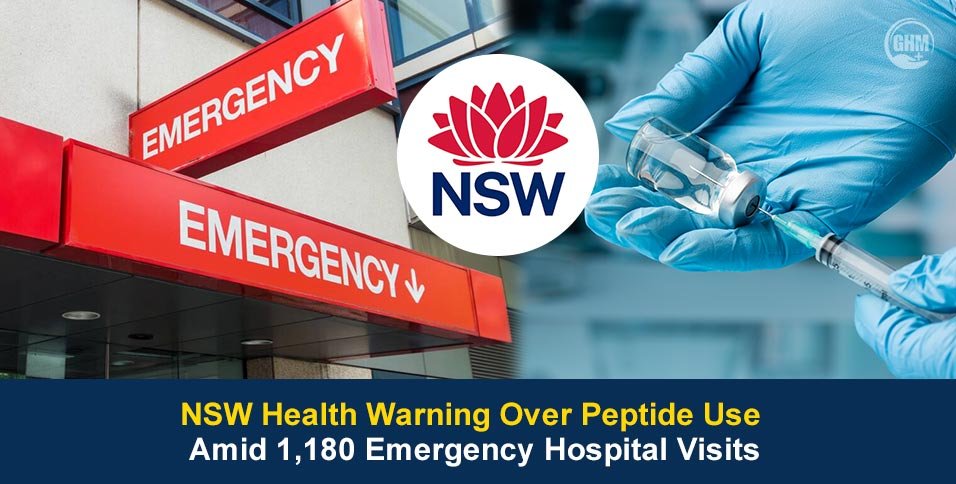
NSW Health has issued a warning about unapproved peptide products after new surveillance data recorded 1,180 emergency department presentations linked to peptide use across New South Wales (NSW), Australia, between July 1, 2025, and September 30, 2026. These numbers are raising concerns about patient safety and pressure on public hospitals. The NSW Health warning over peptide use urges people to avoid unapproved products marketed online for weight loss, muscle growth, injury recovery, and anti-ageing.
Why Was The NSW Health Warning Over Peptide Use Issued?
The NSW Health report highlights a rapid increase in presentations associated with unapproved peptide use. Although the figures do not establish that every case involved confirmed peptide-related injury, the trend has prompted health authorities to strengthen public awareness and clinical vigilance.
“We know that using these unapproved substances can come with real health risks, but it’s particularly alarming to see the growing pressure they’re placing on our health system,” said the Health Minister, Ryan Park, in the official announcement.
The findings of unregulated peptide use in Australia underline growing concerns about the availability of unapproved medicines in Australia, particularly products sold outside established medical and pharmacy channels.
How Is the Social Media Peptide Trend Raising Concern?
Peptides are short chains of amino acids, the building blocks of proteins. Some approved medicines use peptides to treat specific health conditions. However, the NSW Health warning over peptide use focuses on unapproved peptide products that have not undergone the required Australian regulatory assessment.
The social media peptide trend has increased the visibility of products promoted as shortcuts to improved health, physical performance, and appearance. Influencer-promoted peptides may be advertised with claims involving:
- Peptides for weight loss: Products marketed as supporting rapid weight reduction.
- Peptides for muscle growth: Substances promoted for muscle development or performance enhancement.
- Anti-ageing peptides: Products claiming to reverse ageing or improve longevity.
- Injury recovery peptides: Substances promoted for tissue repair and faster recovery.
NSW Health identified BPC-157, GHK-Cu, TB-500, retatrutide, and CJC-1295 among the products that are not currently approved for use in Australia. These claims should not be mistaken for evidence of safety or effectiveness.
What Do Consumers Need to Know About Peptide Safety Risks?
The Therapeutic Goods Administration (TGA) regulates therapeutic goods in Australia. The TGA has not assessed the unapproved peptide products for safety, quality, or effectiveness.
According to NSW Health, these unapproved peptide products may contain incorrect ingredients, unexpected concentrations, contaminants, or none of the advertised active ingredients. Some may also be non-sterile, increasing the risk of infection when injected. Professional packaging, online reviews, and claims of laboratory testing do not guarantee product safety.
Reported and potential peptide safety risks include:
- Severe or prolonged vomiting and abdominal pain.
- Allergic reactions, including potentially life-threatening anaphylaxis.
- Injection-site inflammation, infections, and sepsis.
- Liver injury, kidney damage, and acute pancreatitis.
Certain unapproved peptide products may also delay stomach emptying, increasing the risk of complications during anaesthesia. These risks can arise from the substance itself, the product’s quality, or unsafe injection practices.
What’s The Advice For Consumers in the NSW Health Peptide Use Warning?
In the NSW Health warning over peptide use, the department recommends discussing health and fitness goals with a general practitioner (GP) rather than relying on unregulated peptide use in Australia or products advertised through informal online channels.
Consumers should:
- Use only appropriately prescribed, approved medicines dispensed through legitimate Australian pharmacy channels.
- Check with their prescriber whether a medicine is registered on the Australian Register of Therapeutic Goods (ARTG).
- Speak with a qualified health professional before taking another dose if they are already using an unprescribed peptide product.
- Tell healthcare professionals about peptide use before surgery, anaesthesia, or other medical treatment.
People should also seek advice promptly if they experience adverse symptoms of peptide use. The NSW Poisons Information Centre is available on 13 11 26, 24 hours a day, for advice about medication errors and suspected poisoning. Anyone who is unconscious or having difficulty breathing needs emergency assistance by calling 000.
What Actions Are Taken To Strengthen Peptide Safety Monitoring?
NSW Health is monitoring suspected peptide-related harm through emergency department presentations, calls to the Poisons Information Centre, and reports from clinicians. When serious illness appears linked to a peptide product, the department works with the TGA and, where relevant, law enforcement agencies to investigate its source.
The department has also advised clinicians to consider unapproved peptide exposure when assessing otherwise unexplained symptoms, including severe vomiting, injection-site infections, acute pancreatitis, and liver injury.
Healthcare facilities should record peptide use in medication histories and report significant suspected harm through appropriate clinical and regulatory channels.
The NSW Health warning over peptide use reinforces the importance of evidence-based medical advice and transparent communication between patients and healthcare professionals.