Progress in medicine rarely moves at the same pace everywhere. While some specialties evolve rapidly, others remain anchored to practices that have changed little over time. Nowhere is this more apparent than in women’s health, where advanced clinical knowledge often coexists with tools that are uncomfortable, invasive, and slow to improve.
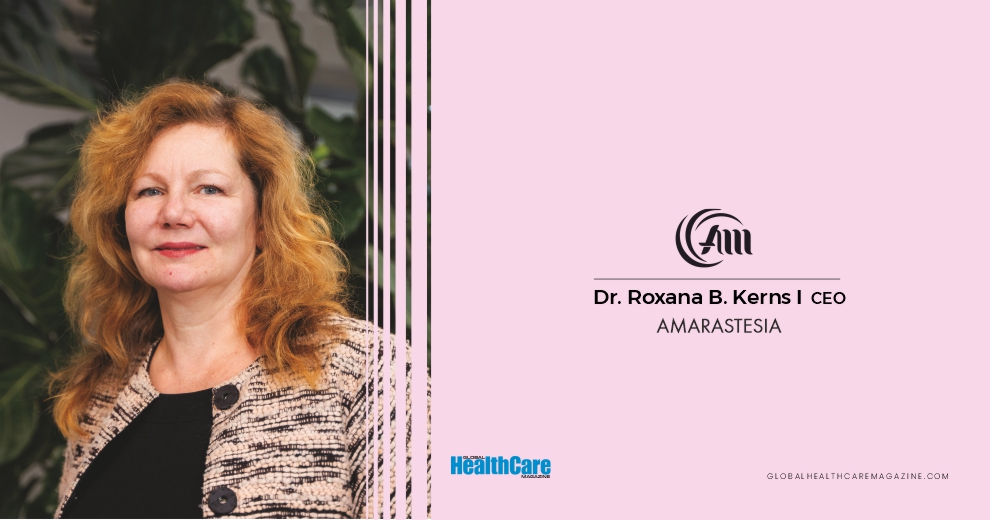
Dr. Roxana B. Kerns, CEO of Amarastesia, recognized this imbalance early in her career. Trained as an anesthesiologist, she worked at the intersection of anesthesia, surgery, and gynecology, supporting patients through procedures that frequently required sedation for reasons unrelated to medical complexity. The issue, she observed, was not the intervention itself but the instruments used to perform it. “Women were often anesthetized because the tools caused pain and fear, not because the procedure demanded it,” she recalls.
As she moved through operating rooms and recovery wards, the pattern became difficult to ignore. Despite significant advances across medicine, gynecological instruments remained largely metallic and force-based, bearing little resemblance to the precision tools used elsewhere. For Dr. Kerns, this disconnect raised a deeper question about innovation and equity in care. What began as a clinical observation would soon shape a broader mission to rethink how women experience surgical treatment.
From Clinical Insight to Company Mission
Amarastesia LTD began with a simple but unresolved tension that Dr. Kerns had carried from the operating room into her thinking beyond it. Medicine expected precision, safety, and dignity, yet many devices used in women’s care failed to reflect those values. The company was founded to close that gap, not through incremental fixes, but through a fundamental rethink of how gynecological tools are designed.
At its core, Amarastesia brings together clinical insight, engineering, and materials science to address problems that have long been accepted as unavoidable. The focus is on developing atraumatic devices that reduce pain, anxiety, and unnecessary reliance on anesthesia. “The goal has always been to make care safer and more humane,” Dr. Kerns says.
Rather than treating discomfort as an inevitable trade-off, Amarastesia challenges the assumption that women must endure outdated tools for modern procedures. Its mission is direct and unwavering: to deliver healthcare that is not only effective, but respectful of the patient experience.
Designing Devices Around the Patient, Not the Procedure
What sets Dr. Kerns’ innovations apart is not novelty for its own sake, but a deliberate return to fundamentals. Her patented pass-through dilator and self-administered microneedle devices were designed from first principles, with safety, comfort, and precision as the starting point. Unlike conventional tools that rely on force-based mechanics, these devices work with the body rather than against it.
The shift may seem subtle, but its implications are significant. By reducing pain and trauma, these designs make it possible to move certain gynecological procedures out of the operating room and into outpatient settings. In some cases, they even allow women to manage conditions safely at home. “If a device is precise and gentle, the entire care model can change,” Dr. Kerns explains.
Beyond patient experience, the approach also eases clinical burden. Fewer invasive procedures mean less reliance on anesthesia and more efficient use of healthcare resources. The result is innovation that improves care on both sides of the exam table.
Engineering with Discipline and Restraint
For Dr. Kerns, balance is not achieved through compromise but through sequence. Every new device begins with a single, patient-centered question: what does the experience feel like, and how can it be made safer, gentler, and more predictable? Only after that is answered does the engineering begin.
Safety comes first, not as a feature but as a foundation. Devices are designed to remove the underlying causes of complications rather than manage them after the fact. Comfort follows closely. In this context, it is not a luxury or a marketing claim, but a clinical requirement that shapes design decisions from the start.
Affordability and scalability emerge through restraint. Instead of adding layers of complexity, Dr. Kerns favors simplicity in both design and manufacturing. Unnecessary features are stripped away if they do not improve outcomes. The result is technology that can be produced at scale without driving up cost, while remaining true to its original purpose of improving patient care.
Built on Clinical Depth and Cross-Disciplinary Trust
Innovation at this level does not happen in isolation. At Amarastesia, Dr. Kerns has assembled a team grounded first in clinical reality. Gynecologists play a central role, offering firsthand insight into the challenges faced in daily practice and helping ensure that each device responds to real needs, not theoretical ones.
That clinical perspective is reinforced by regulatory specialists, engineers, and quality assurance professionals who understand what it takes to move an idea from concept to safe, approved use. The group includes MDs, DOs, and PhDs with deep experience in women’s health, many of whom have spent decades working at the front lines of care.
What unites the team is not just expertise, but alignment. Each discipline informs the other, creating a feedback loop between patient experience, engineering precision, and regulatory rigor. For Dr. Kerns, this balance of perspectives is essential. “You cannot design meaningful medical technology unless everyone at the table understands both the science and the human stakes.”
Anchored by Expertise, Strengthened Through Partnership
Progress at Amarastesia is shaped as much by collaboration as by invention. Dr. Kerns works closely with key opinion leaders in gynecology and minimally invasive surgery across Europe and the United States. Their day-to-day experience in clinical settings helps define design requirements and establish rigorous safety thresholds grounded in real-world use.
The company’s technical foundation is reinforced through partnerships with research institutions such as HE-ARC University of Neuchâtel and Switzerland Innovation Park Biel/Bienne. These relationships bring scientific discipline and engineering validation to early concepts, ensuring ideas can withstand scrutiny beyond the lab.
On the business side, Amarastesia engages with investors and accelerators who provide a strategic perspective and help prepare the company for commercialization. To support affordability and scale, the team collaborates with advanced manufacturing partners like Tekni-Plex, specialists in precision molding, medical-grade materials, and high-volume production.
Leading with Vision, Earning Trust Through Evidence
As CEO, Dr. Kerns carries responsibility for both direction and discipline. Her role begins with setting a clear vision for the company and defining an innovation agenda that stays tightly aligned with patient safety and access. From there, she oversees the careful execution required to take a medical device from early concept to clinical use and, ultimately, global adoption.
Equally central to her role is building trust with healthcare providers. Dr. Kerns approaches this deliberately, knowing that new technology earns acceptance only when it respects clinical judgment. Transparency is nonnegotiable. Data and evidence are shared openly, and feedback from clinicians is treated as essential, not optional.
“We are not asking providers to change how they care,” she says. “We are giving them tools that help them work more safely and in closer alignment with the standard of care women deserve.” In an industry where skepticism is healthy, that clarity has become a foundation for credibility.
When Alignment Matters Most
Leadership was tested for Dr. Kerns at a critical point, as one of Amarastesia’s devices moved toward clinical validation. Progress depended on regulatory review, technical readiness, and operational execution, all advancing at different speeds. External partners were misaligned, timelines slipped, and pressure mounted from multiple directions.
Rather than projecting confidence for its own sake, Dr. Kerns focused on restoring clarity. She reestablished a clear operational framework, defined responsibilities, and addressed gaps that had been left unspoken. “Leadership in those moments is not about appearing certain,” she reflects. “It is about creating certainty for others.”
The path forward required disciplined coordination and decisive action, including difficult conversations that could no longer be delayed. By confronting issues directly and realigning the team around shared goals, momentum returned. For Dr. Kerns, the experience reinforced a core belief: when complexity increases, values become the most reliable guide.
Measuring Progress Beyond the Patent
One of the clearest markers of Amarastesia’s impact is the successful development and patenting of its atraumatic CerAMvix platform. Designed to move away from force-based access and dilation, the technology represents a structural change in how gynecological procedures can be performed. Clinicians have described it as a long-overdue step forward, one that addresses risks and discomfort that had been accepted for far too long.
Beyond a single platform, progress is reflected in the strength of the company’s intellectual property. A growing family of granted and pending patents underscores both technical rigor and long-term vision. Equally telling is the depth of Amarastesia’s clinical and strategic partnerships, which continue to shape development and validation.
Yet Dr. Kerns points to a less tangible outcome as the most meaningful. By questioning entrenched norms, the company has helped shift the conversation toward safety, comfort, and dignity in women’s health. It has been shown that better alternatives are not only possible, but necessary.
Building a Platform, Not a Single Solution
For Dr. Kerns, the future is not defined by one device, but by a broader shift in how gynecological care is delivered. At Amarastesia, the focus is on building a platform of technologies that replace outdated instruments with solutions designed around precision, comfort, and dignity. Each new development builds on the same premise: women should not have to endure trauma for the sake of treatment.
The next step is CerAMvix Smart, a flexible, atraumatic, all-in-one cervical dilator and hysteroscope intended to replace rigid hysteroscopy tools that are still widely used today. By integrating access and visualization into a gentler design, it aims to change both the procedure and the patient experience.
Beyond diagnostics, the vision extends into therapy. CerONvix, a bimodal atraumatic device for cervical cancer, is designed to enable targeted radiation while preserving healthy tissue and supporting regional immunotherapy. Together, these technologies reflect a long-term commitment to reimagining standards of care rather than working around them.
Where Creativity and Leadership Meet
Dr. Kerns believes balance doesn’t come from separating work and life into neat compartments. It comes from returning to the same source that first drew her to medicine. She sees medicine as an art as much as a science, one that demands creativity, intuition, and adaptability, especially in moments of pressure.
That perspective carries into her life beyond the office. She began painting shortly after medical school, starting with simple life drawings before moving into oil and acrylic work. The process allows her to explore texture, color, and emotion in a way that is both expressive and grounding. It offers a quiet counterweight to the intensity of building a medical technology company.
She also finds restoration outdoors, walking, and hiking with her two dogs. The routine has become an unexpected source of resilience. Through that bond, she has learned that leadership is shaped less by moments of success and more by the steady relationship one builds with oneself. Those lessons, she says, carry directly into how she leads and makes decisions.
A Compass for the Long Trail Ahead
If Dr. Kerns were to leave readers with one thought, it would be a reframing of what leadership looks like in practice. She often compares it to a hiking trail, demanding creativity, resilience, and courage, with no guarantee of a clear path ahead. Progress comes not from moving faster, but from staying oriented.
For her, that orientation comes through self-learning. Leadership, she believes, is not about projecting invincibility or having all the answers. It is about recognizing limitations, remaining curious, and committing to continuous learning. Those habits, practiced consistently, create steadiness in moments of uncertainty.
This philosophy runs through her work and her life. Whether navigating clinical complexity, building a company, or guiding a team through change, she returns to the same principle. The leaders who endure are not the ones who appear flawless, but the ones willing to learn as they go, adjust their footing, and keep moving forward with intention.
Quotes

Also Read: Women Leaders Advancing Patient-Centric Medical Device Innovation – 2026