Key Points
- The rapid growth of the hair restoration industry has led to a rise in high-volume clinics where quality and medical oversight can suffer.
- A physician-led, one-patient-at-a-time model is emerging as a more reliable approach to consistent, high-quality outcomes.
- Advances such as HUE, FUE, and regenerative therapies like exosomes are expanding what’s possible in modern hair restoration.
- Florida continues to attract patients from across the U.S. and abroad seeking specialized, high-standard care.
The biggest threat to hair restoration growth isn’t demand—it’s inconsistency in care.
The hair restoration industry has grown quickly over the past decade, driven by wider acceptance, improved techniques, and increasing demand from a more diverse patient base. For healthcare leaders and practice operators, that growth brings opportunity: but also new challenges around quality control and patient safety.
A highly concerning trend in the hair restoration industry is the proliferation of “hair mills.” These profit-driven, high-volume clinics prioritize throughput over patient safety, often operating on multiple individuals concurrently. Crucially, critical surgical steps and sometimes the entire procedure are frequently delegated to unlicensed technicians rather than qualified and experienced physicians. While this business model maximizes clinic margins, it significantly increases the risk of medical negligence, preventable complications, and poor aesthetic outcomes, ultimately driving a surge in patients requiring complex corrective surgeries.
In contrast, a smaller group of practices are taking a different approach, focusing on individualized care, surgical oversight, and long-term outcomes rather than daily volume.
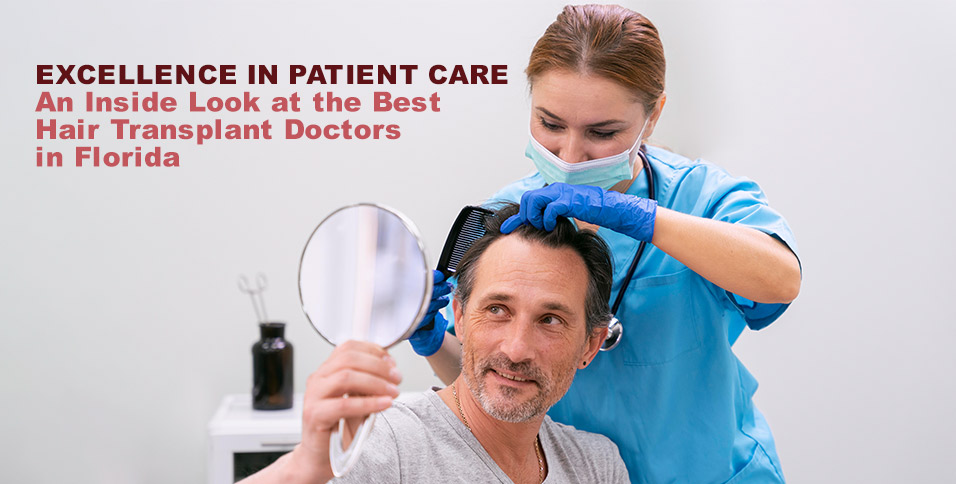
Natural Transplants is one such example. Led by Dr. Matt Huebner and Dr. Harold Siegel, the clinic has built its reputation around a physician-driven model that limits procedures to one patient at a time. That structure allows the surgeon to remain directly involved throughout the entire process, from planning to execution. It’s a more deliberate pace, but one designed to prioritize precision and consistency: two factors that continue to define the best hair transplant doctors in Florida.
Clinical Innovation: Expanding Beyond Traditional Techniques
For providers evaluating hair restoration as a service line, understanding the nuances between techniques remains essential. Follicular Unit Transplantation (FUT) and Follicular Unit Excision (FUE) are still the foundation of most procedures, each offering distinct advantages depending on the patient’s needs.
FUE is often preferred for smaller sessions, while FUT can be more effective when a larger number of grafts is required. Outcomes in both cases depend heavily on surgical skill, patient selection, and careful donor management.
At Natural Transplants, these techniques have been further refined through the development of the HUE (High-Yield Unit Extraction) method. This approach builds on traditional FUT by allowing for a larger, carefully selected donor section to be harvested safely. The result is a higher graft yield in a single session, which can significantly reduce the need for multiple procedures over time.
Just as important as the technique itself is how it’s chosen. Rather than defaulting to one method, the surgical plan is tailored to each patient based on hair characteristics, donor availability, and long-term goals. That level of customization is often what separates top-tier practices from more standardized clinics.
Corrective Work and the Growing Demand for Expertise
As the number of procedures increases worldwide, so does the demand for corrective surgery. Many experienced practices, including reputable hair transplant doctors in Florida, now see a steady stream of patients looking to repair previous work, whether due to unnatural hairlines, overharvesting, or visible scarring.
Dr. Matt Huebner, Chief Medical Director at Natural Transplants, emphasizes that avoiding these corrective scenarios ultimately comes down to proper donor area management. “The most important part of any hair transplant is not just covering the bald spot, but carefully preserving the safe donor zone,” notes Dr. Huebner. He frequently warns that improper technique or overharvesting during large sessions “can lead to poor growth, visible scarring, and long-term disappointment.”
Because of these risks, corrective cases tend to be much more complex than primary procedures. They require careful planning, a deep understanding of donor limitations, and a high level of technical precision. Addressing these issues successfully not only restores a patient’s appearance but also helps rebuild their confidence after a negative experience.
This shift has reinforced an important point within the industry: choosing a provider based on cost or convenience alone can have long-term consequences. For many patients, finding the best hair transplant doctor in Florida ultimately becomes about trust, experience, and a proven track record of consistency and safe, strategic donor use.
The Role of Regenerative Medicine
Alongside surgical advancements, regenerative therapies are beginning to play a larger role in hair restoration. One area of growing interest is exosome therapy, which is being used to support healing and potentially enhance graft survival.
Exosomes are small signaling particles derived from stem cells that help regulate cellular communication. In a clinical setting, they may contribute to reduced inflammation, faster recovery, and improved overall outcomes when used alongside transplant procedures.
While research is still evolving, early findings and clinical experience suggest that these therapies could become a valuable complement to established techniques, particularly in complex or high-density cases.
A Sustainable Model for Growth
From a business perspective, the success of practices like Natural Transplants highlights a broader shift in how quality care is delivered in this space. Rather than scaling through volume, these clinics are building reputations through outcomes, patient experience, and long-term trust.
That approach tends to result in strong referral networks, repeat demand, and a steady flow of medical tourism patients, without the risks often associated with high-throughput models.
For healthcare executives and investors, the takeaway is straightforward: sustainable growth in hair restoration is closely tied to clinical integrity. Practices that emphasize physician involvement, thoughtful innovation, and patient-centered care are better positioned to deliver consistent results and to stand out in an increasingly crowded market.
Medical Disclaimer: This article is for informational purposes only and does not constitute medical advice.