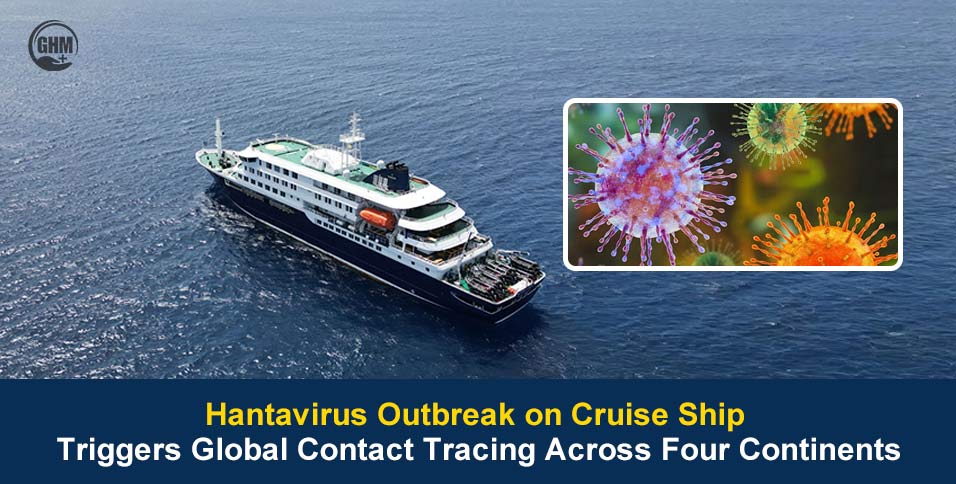
The Hantavirus outbreak on cruise ship MV Hondius is continuously growing. It has prompted international health agencies to launch large-scale infectious disease monitoring efforts after three passengers died and several others fell ill during the Atlantic voyage. The Dutch-flagged vessel, carrying nearly 150 passengers and crew, is now heading toward Spain’s Canary Islands, and authorities across multiple countries are tracing travelers who disembarked before the virus was officially confirmed.
According to reports, health officials in Europe, Africa, Asia, and North America are monitoring former passengers after dozens left the ship at St. Helena on April 24 without immediate contact tracing measures in place.
The Hantavirus outbreak has drawn global attention and concern because tests identified the Andes virus strain, the only known hantavirus capable of limited human-to-human transmission.
WHO Says Cruise Ship Hantavirus Outbreak Is Not a Pandemic Threat
The World Health Organization (WHO) has stressed that the current situation is not comparable to COVID-19 and that the public health risk remains low.
Speaking during a WHO briefing, infectious disease epidemiologist Maria Van Kerkhove said hantavirus spreads “very, very differently” from airborne viruses such as influenza or coronavirus. The WHO officials explained that hantavirus transmission generally requires close and prolonged contact.
WHO Director-General Tedros Adhanom Ghebreyesus said, “The agency believes the outbreak can remain contained if countries continue coordinated surveillance and public health emergency response measures.”
The organization has also arranged the shipment of 2,500 diagnostic kits to laboratories in five countries to support faster testing and outbreak management.
Three Deaths Reported on MV Hondius Cruise Ship
The luxury expedition vessel MV Hondius departed from Ushuaia, Argentina, on April 1 for a trans-Atlantic journey.
Authorities have linked three deaths to the cruise ship hantavirus outbreak:
- A Dutch man who died on board on April 11
- His wife, who later died in South Africa after disembarking
- A German woman who died on board on May 2
At least five confirmed Hantavirus infections have been identified so far, while additional suspected cases remain under investigation.
A British passenger who tested positive for the virus remains in intensive care in South Africa. The ship’s doctor was also medically evacuated alongside two other patients for specialized treatment in Europe.
Oceanwide Expeditions, the company operating the vessel, said no remaining passengers or crew members were showing symptoms of Hantavirus as of Thursday.
Cruise Passengers Tracked Across Multiple Countries
Responding to the Hantavirus outbreak on cruise ship has become increasingly complex because dozens of travelers left the ship before authorities confirmed the first hantavirus case on May 2.
Between 29 and 40 passengers disembarked at St. Helena, a remote British territory in the South Atlantic Ocean. Many later traveled internationally.
Health authorities are now conducting infectious disease monitoring in several countries amid the hantavirus outbreak, including:
- Netherlands
- United Kingdom
- Singapore
- South Africa
- Switzerland
- United States
- France
Singapore’s Communicable Diseases Agency confirmed that two men who returned from the cruise are being isolated and tested after sharing a flight with one of the infected passengers.
Meanwhile, Dutch officials are monitoring airline passengers and crew after an infected traveler briefly boarded a flight in Johannesburg before becoming too ill to continue traveling. A Dutch flight attendant who may have been exposed is reportedly being tested in isolation. If confirmed positive, it could represent the first infection connected to the outbreak outside the ship itself.
What Is Hantavirus Pulmonary Syndrome?
The outbreak has renewed global concern about hantavirus pulmonary syndrome (HPS), a rare but potentially deadly respiratory illness caused by hantaviruses.
Most hantaviruses spread through exposure to infected rodent urine, saliva, or droppings. People typically become infected after inhaling contaminated particles in enclosed spaces.
Common hantavirus symptoms include fever, muscle aches, fatigue, headache, and shortness of breath. Severe hantavirus cases can rapidly progress to lung failure and breathing complications.
The strain linked to the cruise outbreak appears to be the Andes virus, which circulates mainly in parts of South America. Unlike most hantaviruses, the Andes virus has previously shown evidence of limited human-to-human transmission through close contact.
However, WHO officials continue to emphasize that widespread community transmission is unlikely.
Investigation Around The Hantavirus Outbreak on Cruise Ship
Health investigators believe the outbreak may have originated before passengers boarded the ship.
WHO officials said the Dutch couple linked to the first known cases had recently traveled through Argentina, Chile, and Uruguay on a bird-watching trip. They reportedly visited rural areas where rodent species known to carry the Andes virus are present.
Argentina’s Health Ministry is now preparing field investigations in Ushuaia, where the cruise began. Scientists are expected to test rodents near landfill sites and other high-risk areas for evidence of the virus.
The country has experienced a rise in hantavirus cases in recent years. Argentine health officials reported 28 hantavirus-related deaths last year, significantly above the average recorded over the previous five years.
Hantavirus Cruise Ship location is now near Spain’s Canary Islands, as it is approaching the place soon. The authorities are preparing additional containment and repatriation measures.
The WHO response is ongoing with cruise passenger quarantine and medical evacuations.
Spanish authorities said discussions are underway for repatriation flights for British and American passengers once the vessel arrives in Tenerife.
Continuous Monitoring of New Hantavirus Cases
Because hantavirus symptoms can take up to six weeks to appear, health authorities expect monitoring efforts to continue well into June.
Experts say the incident of the Hantavirus outbreak on cruise ship highlights the challenges of managing zoonotic disease outbreaks during international travel, especially when symptoms emerge after passengers disperse across multiple countries.
While WHO continues to describe the broader public risk as low, officials warn that additional suspected infections may still emerge as surveillance expands.
For now, the Hantavirus on the Atlantic Cruise Ship remains one of the most closely watched infectious disease events in recent years.