When it comes to developing new treatments, it requires extensive research and clinical testing to determine whether potential therapies are safe and effective. During clinical trials, participants may receive investigational products (IPs), such as investigational drugs or biologics, according to the study protocol.
These products must be available at the right clinical trial sites and in the required quantities throughout the study. Otherwise, insufficient supply can result in stockouts, shipment delays, and potential interruptions in treatment. On the other hand, supplying more IPs than needed can lead to excess inventory, unused supplies, and product expiration. That is why managing this supply can be challenging for many clinical sites. Here is where clinical trial supply management software comes into play.
What is Clinical Trial Supply Management Software?
Clinical trial supply management software is a tool that automatically plans, tracks, manages, and optimizes the supply of IPs throughout a clinical trial.
Clinical trials can involve numerous sites, countries, treatment groups, packaging configurations, and changing enrollment rates. In order to maintain optimal inventory levels, managing these variables manually can be difficult.
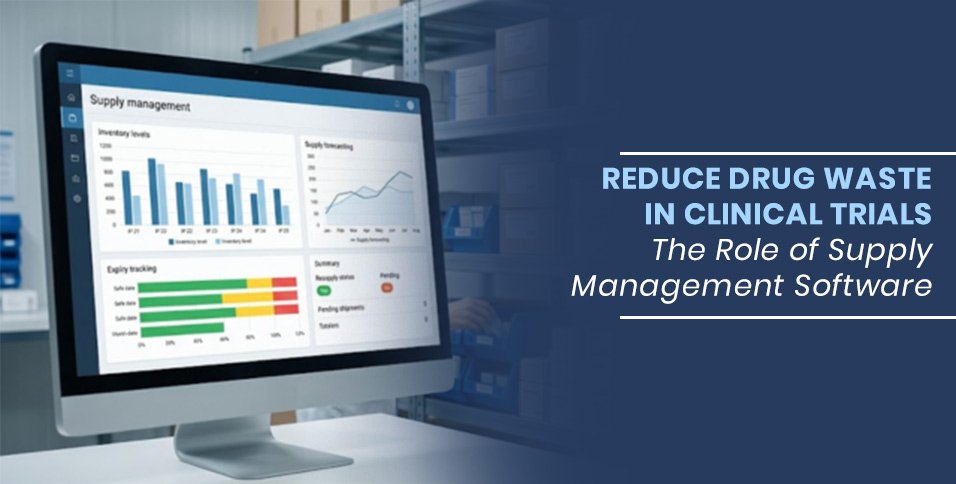
At times, supply management software helps teams respond to these changes using centralized and more current data. This helps forecast product requirements, monitor inventory levels, manage shipments and resupply, track expiry dates, and maintain accurate records of product movement.
As a result, it helps ensure that the right IPs are available at the right location, in the right quantity, and at the right time. It helps minimize excess inventory, stockouts, and avoidable waste.
How Does Clinical Trial Supply Management Software Reduce Drug Waste?
1. Improves Inventory Visibility
Real-time or near-real-time visibility into inventory can help supply teams understand how much product is available at each site, depot, or other location.
Instead of distributing additional supplies based only on planned enrollment, teams can consider actual inventory and dispensing information. This can reduce the likelihood of sending unnecessary shipments to sites that already have sufficient stock.
Better visibility can also help identify locations with excess inventory that may require redistribution or closer monitoring.
2. Supports More Accurate Supply Forecasting
Forecasting is an important part of clinical trial supply management. Sponsors need to estimate how much investigational product will be required based on factors such as enrollment, treatment schedules, dispensing patterns, and study duration.
Supply management software can bring these data points together to support more informed forecasting.
As actual enrollment and dispensing data become available, forecasts can be adjusted to reflect changing trial conditions. This can help reduce the gap between planned supply requirements and actual demand.
3. Enables More Efficient Resupply
Sending too much product to a site can increase the risk of unused inventory and expiration. Sending too little can create stockouts and emergency shipments.
Supply management software can support predefined resupply rules based on inventory levels, enrollment, dispensing activity, and other study parameters.
This allows sponsors to move toward a more demand-driven resupply approach rather than relying entirely on fixed shipment schedules.
4. Helps Monitor Product Expiry
Expiration is one of the most direct causes of pharmaceutical waste. Investigational products may have limited shelf lives. That is why it is crucial to know which inventory is approaching its expiry date.
Supply management software can provide visibility into expiry dates and inventory levels. This can help teams identify supplies that need attention before they become unusable.
Where appropriate, teams may then be able to adjust distribution plans, prioritize inventory use, or take other actions to reduce avoidable losses.
5. Reduces Overstocking at Clinical Trial Sites
Sites with more inventory than they require can become a source of unnecessary waste.
For example, if a site was expected to enroll 20 participants but ultimately enrolls only 10, its planned inventory requirement may no longer be accurate.
At times, supply teams need to combine enrollment and inventory information. This can help better understand actual site demand and avoid continuing to send supplies according to outdated assumptions.
6. Supports Better Inventory Allocation
Clinical trials can involve multiple countries, sites, depots, treatment arms, packaging configurations, and product types. So, teams need to visualize the supply network to manage these inventories efficiently.
At times, supply management software can turn out to be a lifesaver. It helps teams track where inventory is located and how it is being used. This information can support better allocation decisions and help identify opportunities to use available inventory before producing or shipping additional supplies.
The Bottom Line
Now that you know how clinical trial supply management software helps reduce drug waste, what are you waiting for? Find a reliable tool to reduce drug waste and save your resources now!