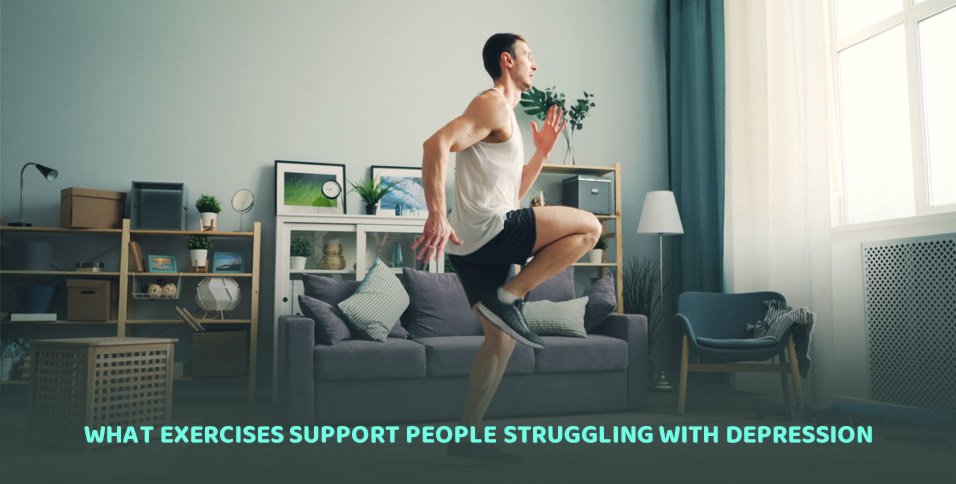
“Lace up your sneakers and run or hit the gym” is the last thing you want to hear when you are deep in the heavy fog of depression. This piece of advice feels dismissive, exhausting, and frankly impossible.
But contrary to what you believe, exercise helps reduce symptoms of depression. A study published in Frontiers in Psychiatry revealed that doing aerobic exercise 3 times a week reduced depression symptoms by 32% over a year.
In this article, we will share some exercises that help reduce symptoms of depression. But before that, let us take a look at what happens in your brain when you exercise.
What Happens in Your Brain When You Exercise?
Exercise triggers positive chemical changes in the brain. When you move, your body releases endorphins. These natural chemicals act as mood elevators.
Physical activity also boosts levels of serotonin and norepinephrine. These neurotransmitters regulate your mood, attention, and stress response.
Moving your body helps your brain produce brain-derived neurotrophic factor that repairs brain cells and grows new connections. This helps combat the neurological impact of chronic depression.
A 2026 review in ScienceDaily confirms that structured physical workouts can be just as effective as traditional medications for easing symptoms of depression.
Building a steady routine is essential for long-term well-being. So, make sure you follow a structured depression exercise program to take the guesswork out of movement and keep your progress on track.
The Brain-Body Therapy exercise app can help overcome lethargy and rebuild energy from the ground up. Additionally, it combines structured workouts with counseling support, easing the path for people struggling with depression.
Exercises That Help With Depression
Here are the exercises that can help reduce depressive symptoms:
Brisk Walking in Nature
Walking is one of the easiest ways to improve your heart rate. A brisk walk around your neighborhood or through a local park works wonders.
Walking helps with depression because it gets your heart pumping just enough to boost blood flow to the brain. This releases endorphins and regulates stress hormones like cortisol.
Start with a short walk of about 10 to 15 minutes a day. Once you get used to it, you can build up to 30 minutes most days of the week.
Gentle Yoga
Yoga combines physical poses with deep breathing. It calms your nervous system and builds body awareness. This practice helps release physical tension stored in your muscles.
When you engage in gentle movements like the cat-cow stretch, you build greater body awareness and learn to tune into physical sensations without judgment. This mindful approach fosters both physical flexibility and emotional resilience.
Resistance Training
Lifting weights builds physical strength, but it also improves mental resilience. Resistance training involves using dumbbells, resistance bands, or your own body weight.
As television personality and entrepreneur Khloé Kardashian shared about her own fitness routine, “Working out is my therapy. For me, it’s the best way to cope with stress. It keeps me focused… I leave and I feel so much better. I feel mentally lighter, and it is so vital for me.”
A comprehensive 2025 review in PMC found that strength and resistance training significantly helped lower depressive symptoms. Engaging in regular muscle-strengthening activities promotes a healthy sense of accomplishment and boosts self-esteem.
You do not need heavy equipment or an advanced gym setup to start. Simple bodyweight exercises like chair squats, wall push-ups, or gentle resistance band pulls in your living room offer an effective entry point.
FAQs
Why does gentle exercise feel easier to start than high-intensity workouts when depressed?
Low-intensity activities require minimal mental energy and physical exertion, lowering the barrier to entry. This approach prevents the overwhelm associated with strenuous gym routines, making it much easier to build consistent, compassionate habits.
Can physical activity replace traditional treatments for clinical depression?
Physical activity is a powerful complementary tool, but it is not intended to replace professional medical care or medication. Clinical guidelines recommend using exercise alongside psychotherapy and medical treatments for the most comprehensive and effective recovery.
How quickly can someone start noticing mood improvements from walking or stretching?
Many individuals experience an immediate, short-term mood boost following a single 15-minute walk or stretching session due to endorphin release. Lasting, cumulative neurological benefits generally develop after several weeks of consistent practice.
Key Statistics
| Intervention & Metric | Finding / Result |
| Aerobic Exercise Frequency (3 times a week over 12 months) | 32% reduction in depressive symptoms. |
| Physical Activity vs. Medication (Structured physical workouts) | Found to be comparable in effectiveness to traditional pharmacological treatments for easing depressive symptoms. |
| Resistance Training (Muscle-strengthening activities) | Significant improvement in lowering depressive symptoms and boosting self-esteem/accomplishment. |
Movement is meant to be a gift to yourself, not another item on an impossible checklist. On days when you have energy, a brisk walk or a strength session can work wonders. But on days when getting out of bed feels monumental, simply stretching your arms overhead or taking a few deep breaths by an open window is enough.
Go one step at a time, treat every small effort as a victory, and give yourself grace.