When you suffer a sudden blow or jolt to your head, it disrupts delicate nerve connections in the brain. This injury is called a concussion, which falls under mild traumatic brain injury. This causes lingering dizziness, lightheadedness, motion sensitivity, unsteadiness, or difficulty focusing on screens.
After encountering a head injury, the first advice used to be taking proper rest and staying in a dark room. However, research says that complete isolation and no movement can actually delay the concussion recovery process. Rather, patients are encouraged to follow structured, gentle movements to achieve faster recovery. One such approach could be concussion rehab exercises that safely restore balance, visual focus, neck comfort, and daily stamina.
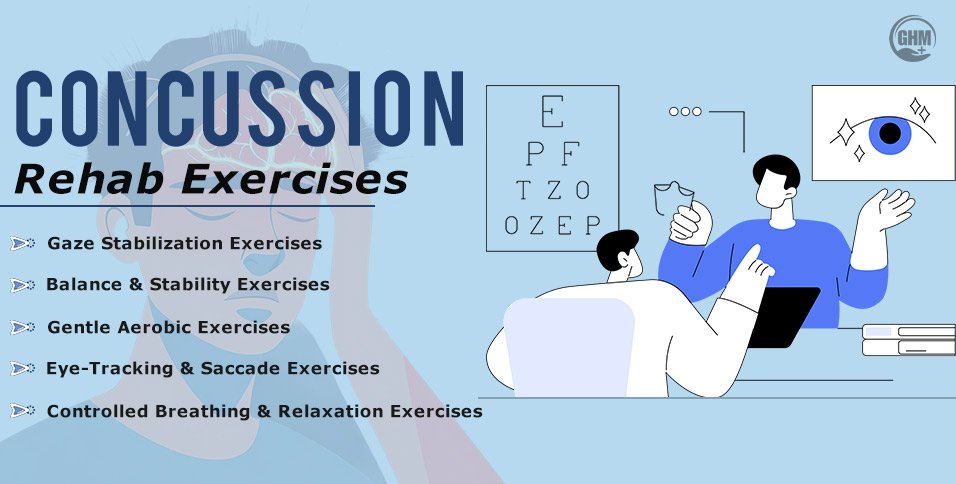
In this article, you will get to know the 7 categories of concussion rehab exercises along with safety protocols and tips to build a concussion recovery routine.
What Are Concussion Rehab Exercises?
Concussion rehab exercises are specialized, targeted movements designed to restore the normal communication pathways between your brain, eyes, inner ears, and body after a mild traumatic brain injury.
According to a study, early, symptom-limited exercises for concussion recovery after a 24–to–48-hour rest period improve concussion recovery times and reduce symptom severity by an average of nearly 5 days.
Unlike general fitness workouts or weightlifting routines, post-concussion rehabilitation targets specific sensory systems:
- The Vestibular System: Controls balance, spatial awareness, and motion stability.
- The Oculomotor System: Coordinates eye muscle movements, depth perception, and tracking.
- The Cervical Spine: Restores neck flexibility and relieves muscle strain that triggers headaches.
- The Autonomic Nervous System: Regulates brain blood flow during physical exertion.
A licensed physical therapist or concussion specialist evaluates the unique symptom profile before assigning specific exercises for concussion recovery. Because every brain injury differs, Concussion rehab exercises are also differently planned as per individual treatment.
7 Concussion Rehab Exercises to Support Recovery
The following seven categories of concussion rehab exercises form the backbone of modern concussion physical therapy. Perform these movements only after receiving clearance from a qualified healthcare professional.
1. Gaze Stabilization Exercises
- Target Symptoms:
Blurred vision when moving your head, dizziness in busy environments, and spatial disorientation.
- How To Do It:
To practice concussion vision therapy, hold a target (such as a sticky note with a letter written on it or your thumb) at eye level about arm’s length away. Keep your eyes fixed on the letter while slowly turning your head from side to side for 30 to 60 seconds. Repeat the exercise by nodding your head up and down while keeping the target in sharp focus.
- Clinical Purpose:
This exercise retrains the vestibulo-ocular reflex, the natural reflex that keeps your vision steady while your head moves. Retraining the vestibulo-ocular reflex helps clear up visual baseline fuzziness when walking through grocery store aisles or busy hallways. Always keep movements slow initially, and stop if dizziness spikes significantly.
2. Eye-Tracking and Saccade Exercises
- Target Symptoms:
Eye strain, difficulty reading printed text, screen fatigue, and trouble following moving objects.
- How To Do It:
- Smooth Pursuits: Hold a pen at arm’s length. Keeping your head still, slowly move the pen horizontally and vertically, following the tip with your eyes only.
- Saccades (Quick Eye Shifts): Place two sticky notes on a wall about 12 inches apart at eye level. Keep your head still and rapidly snap your gaze back and forth from the left target to the right target for one minute. Repeat vertically with one note placed above the other.
- Clinical Purpose:
Concussions often disrupt how eye muscles coordinate. Eye-tracking exercises strengthen the brain’s ability to track continuous motion and quickly shift focus across a page, making reading and computer work comfortable again.
3. Balance and Stability Exercises
- Target Symptoms:
Unsteadiness on your feet, poor coordination, feeling off-balance, and fear of falling.
- How To Do It:
Stand on a firm surface near a sturdy counter or wall for safety. Bring your feet together so they touch, fold your arms across your chest, and maintain your posture for 30 seconds. When this feels easy and safe, progress to standing on one foot or standing heel-to-toe (tandem stance).
- Clinical Purpose:
Concussion balance exercises re-establish communication between sensory nerves in your feet, joints, inner ears, and brain stem. Beginners should avoid balancing on soft foam pads or closing their eyes without direct physical therapist supervision to prevent accidental falls.
4. Gentle Neck Mobility and Strengthening Exercises
- Target Symptoms:
Neck stiffness, limited head rotation, tightness at the base of the skull, and cervicogenic tension headaches.
- How To Do It:
- Chin Tucks: Sit upright with good posture. Gently draw your head straight backward, making a slight “double chin,” without tilting your head down. Hold for 5 seconds and release. Repeat 10 times.
- Neck Rotations: Slowly turn your head to look over your right shoulder until you feel a gentle stretch. Hold for 10 to 15 seconds, return to center, and repeat to the left.
- Clinical Purpose:
Most concussions involve a sudden whip of the head that strains soft cervical neck tissues. Gentle neck exercises after concussion relieve tension on cervical nerves, improving blood flow and eliminating neck-driven headaches.
5. Gentle Aerobic Exercises
- Target Symptoms:
Low physical stamina, brain fog, fatigue, and autonomic nervous system dysfunction.
- How To Do It:
Engage in low-impact cardiovascular activity, such as upright stationary cycling or walking on a flat surface, for 10 to 20 minutes daily. Keep your intensity below the level that won’t trigger your symptoms.
- Clinical Purpose:
Landmark research shows that early, sub-symptom aerobic exercise after concussion significantly speeds recovery compared to strict rest. In adolescent trial groups, guided aerobic therapy shortened average recovery times from 17 days down to 13 days.
If upright walking during concussion recovery causes bobbing movements that worsen headaches, stationary bikes offer a stable, head-still alternative.
6. Coordinated Walking and Head-Movement Exercises
- Target Symptoms:
Dizziness while walking, difficulty navigating crowds, and motion discomfort when turning your head.
- How To Do It:
Clear an open hallway free of tripping hazards. Walk forward at a comfortable pace while turning your head smoothly from side to side (looking left, then right) with every step. Perform 10 to 15 paces, turn around slowly, and repeat while nodding your head up and down.
- Clinical Purpose:
Real-world movement requires your brain to process visual information while your body moves through space. Dynamic walking drills integrate vestibular, ocular, and motor signals simultaneously, preparing you to transition safely through the progressive concussion recovery stages.
7. Controlled Breathing and Relaxation Exercises
- Target Symptoms:
Anxiety, elevated heart rate, feeling overwhelmed, muscle tightness, and sleep disturbances.
- How To Do It:
Sit or lie down in a comfortable, quiet room. Place one hand on your upper chest and the other on your belly. Inhale slowly through your nose for 4 seconds, allowing your abdomen to expand while keeping your chest quiet. Exhale smoothly through your mouth for 6 seconds. Practice this for 5 to 10 minutes daily.
- Clinical Purpose:
Physical injuries create neurological stress. Diaphragmatic breathing activates your parasympathetic nervous system, lowering stress hormones, stabilizing blood pressure, and encouraging rest required for overall recovery.
How to Do Concussion Rehab Exercises Safely
A brain injury recovery requires patience and smart pacing. Following structured safety guidelines while performing concussion rehab exercises prevents unnecessary symptom flare-ups:
- Obtain Professional Evaluation First: Never attempt self-directed Concussion Rehab Exercises without an initial exam from a physician or physical therapist trained in brain injury rehabilitation.
- Monitor Symptom Thresholds: Use a simple 0-to-10 Visual Analog Scale to rate your symptoms before, during, and after concussion rehab exercises. A mild, temporary increase of 1 to 2 points during rehab is acceptable. However, if your symptoms jump by 3 points or more, stop immediately.
- Ensure Quick Baseline Recovery: Any mild symptom increase triggered by movement should subside back to your baseline within one hour of resting. If symptoms linger into the next day, reduce your exercise intensity or duration during your next session.
- Prevent Secondary Head Impact: Avoid high-risk activities, contact sports, or workouts with fall risks until your clinician grants full medical clearance.
- Maintain a Symptom Diary: Write down the exercise type, duration, target heart rate, and concussion symptom responses daily. Tracking these trends helps your physical therapist safely adjust your program over time.
How to Build a Concussion Rehabilitation Routine
Building an effective routine for concussion exercises at home is about quality, consistency, and pacing, not intensity. Because brain recovery varies between individuals, a successful routine focuses on gradual progression rather than rigid daily schedules.
SAMPLE DAILY FLOW FOR CONCUSSION REHABILITATION
| Morning | Diaphragmatic Breathing | 5 mins |
| Oculomotor & Gaze Exercises | 5-10 mins | |
| Afternoon | Sub-Symptom Aerobic Walk or Cycling | 15-20 mins |
| Gentle Neck Stretches & Chin Tucks | 5 mins | |
| Evening | Static Balance Progression | 5 mins |
| Symptom Diary Logging & Rest |
Your physical therapist will typically select 2 to 3 targeted categories of concussion rehab exercises to begin with, scheduling short 5-to-10-minute sessions spread throughout the day to prevent mental and physical exhaustion. As your brain adapts and your symptom thresholds improve, your care team will slowly introduce dynamic walking drills and higher aerobic targets.
The primary goal of building a custom routine is helping you return safely to daily activities, schoolwork, job responsibilities, and recreational physical activity without triggering symptom relapses.
When Should You See a Concussion Rehabilitation Specialist?
While gentle concussion exercises at home provide essential support, professional medical oversight ensures your recovery stays on track. You should consult a concussion-trained physical therapist or neurologist if your symptoms persist past 14 days, fail to improve with rest, or significantly interfere with daily functioning.
Specialized clinical evaluation is essential if you experience persistent vertigo, double vision, neck pain, severe screen fatigue, or exercise intolerance. Therapists utilize clinical assessment tools like the Buffalo Concussion Treadmill Test (BCTT) to pinpoint your exact heart rate threshold, creating an individualized exercise prescription tailored specifically for your body.
Warning: Seek immediate emergency medical care if you or someone else experiences severe warning signs of concussion, including repeated vomiting, a worsening severe headache, slurred speech, unequal pupil size, seizures, increasing confusion, numbness, weakness in the arms or legs, or inability to wake up.
Bottom Line
Targeted concussion rehab exercises play a crucial role in modern brain recovery. Moving away from complete, prolonged bed rest in favor of gentle visual, balance, neck, and sub-symptom aerobic therapy helps your brain safely rebuild damaged nerve pathways. Always prioritize careful symptom monitoring, avoid pushing through severe discomfort, and progress at a pace that feels safe for your body.
If you are ready to take the next step in your recovery journey, schedule a comprehensive assessment with a qualified physical therapist to build your personalized rehabilitation plan today.
Frequently Asked Questions
- How soon after a head injury can I start concussion rehab exercises?
Current clinical consensus guidelines recommend 24 to 48 hours of relative rest immediately following a head injury. After this brief initial rest period, you can begin light, sub-symptom activities and gentle rehabilitation under professional healthcare guidance.
- Can doing concussion rehab exercises at home cause long-term damage?
Doing light concussion recovery exercises will not cause structural brain damage. However, pushing through severe symptom flare-ups or attempting high-risk workouts can cause unnecessary discomfort, increase fatigue, and delay your total recovery time. Always keep symptom increases brief and mild.