Imagine taking a sudden, hard hit during a weekend soccer game or bumping your head in a minor car fender-bender. Suddenly, everything feels off, your head throbs, the room spins slightly, and focusing on simple tasks becomes a frustrating struggle. While many people dismiss these episodes as a simple “ding to the head,” they are actually mild traumatic brain injuries (mTBI). Specifically, this injury is called a concussion, and healing from it is a gradual, step-by-step progression rather than a race against time.
These concussion recovery stages often take days to a few weeks, but timelines can vary based on individual health, symptom severity, and lifestyle demands.
In this article, we explore the structured stages of concussion recovery, along with early concussion symptom management to a safe return to normal activities.
What is Concussion?
A concussion is classified as a mild traumatic brain injury (mTBI) that occurs when a physical blow, bump, or violent jolt to the head or body causes the brain to move rapidly back and forth inside the skull. This sudden, forceful motion prompts the brain to bounce or twist against the bony walls of the skull, which stretches and damages delicate nerve fibers, cells, and blood vessels.
This disruption temporarily alters normal brain function, affecting how neurotransmitters send essential messages throughout the body regarding memory, balance, and motor skills. While concussions are frequently associated with contact sports such as football, soccer, hockey, and basketball, they can also result from everyday incidents like car accidents, bicycle falls, or everyday slips.
For most people, recovery from concussion occurs within 2 to 4 weeks (roughly 70% to 90% of cases), though data show that timelines vary significantly by age, sex, and active management.
What Are the 6 Concussion Recovery Stages?
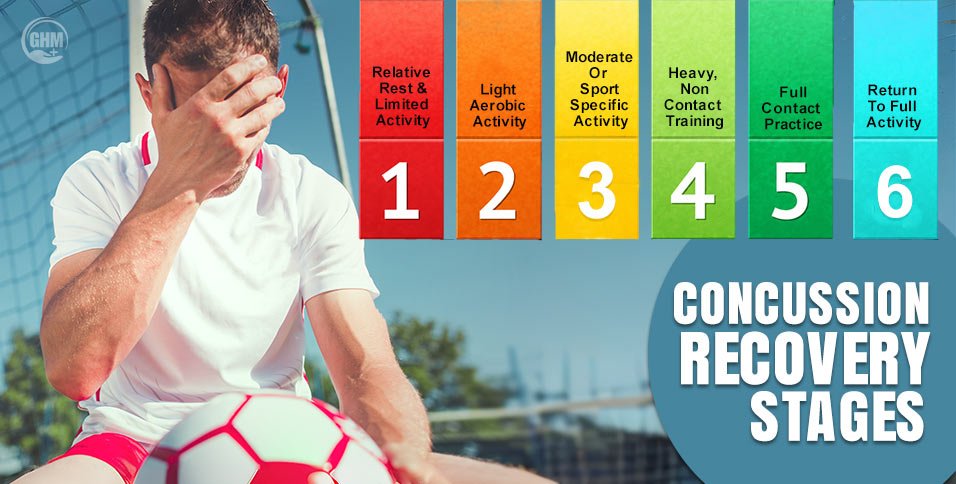
Concussion recovery moves systematically from initial rest to full participation. While clinical protocols can vary slightly, a standard framework of 6 concussion recovery stages helps guide safe rehabilitation.
While these concussion recovery stages are often used for athletes returning to sports, everyday patients follow an individualized path that gradually returns them to school, work, and daily responsibilities.
Stage 1: Relative Rest and Symptom-Limited Activity
The primary focus of the initial phase of concussion recovery is to allow early recovery without prolonged inactivity. This occurs during the first 24 to 48 hours after injury, when patients frequently experience headaches, dizziness, fatigue, confusion, and sensitivity to light or sound.
Strict isolation in a dark room, a practice known as “cocooning,” can actually delay healing. Rather, current medical guidelines emphasize relative rest. Patients are encouraged to engage in calm daily activities, short conversations, light household tasks, and brief, symptom-tolerated walks. During recovery from concussion, screen time should be moderately reduced during the first couple of days to limit cognitive strain; however, complete digital deprivation should be avoided to prevent social isolation and anxiety.
Stage 2: Light Aerobic Activity
Once concussion symptoms at rest begin to significantly improve, the focus shifts to reintroducing gentle movement while carefully monitoring bodily responses.
This second concussion recovery stage typically introduces light physical efforts such as short walks or low-intensity stationary cycling, keeping heart rates under control. This gentle movement promotes cerebral blood flow and encourages recovery without triggering symptom spikes. However, in the second stage, contact sports, collision risks, and activities carrying a high risk of falling must still be strictly avoided. If headaches or dizziness increase, the individual should pause and scale back activity.
Stage 3: Moderate or Sport-Specific Activity
In stage 3 of concussion recovery, as physical tolerance builds, patients gradually increase their movement complexity and physical effort.
For athletes, this concussion recovery stage includes jogging, dynamic cycling, or controlled, non-contact drills. Non-athletes can similarly increase routine responsibilities or work duties for longer stretches. This phase of recovery from concussion challenges balance, coordination, and reaction times. The cardinal rule remains symptom tolerance: activity should challenge the body without causing a noticeable flare-up in head pain or brain fog.
Stage 4: Heavy, Non-Contact Training
The 4the phase of concussion recovery stages prepares the recovering individual for demanding physical and mental tasks without exposing them to the risk of another head impact.
The activities progress to higher-intensity training, running, resistance exercises, and complex agility drills. Clinicians and trainers frequently evaluate cognitive processing and reaction speeds during this concussion recovery stage. Even though the patient is feeling physically fit, it does not automatically mean internal brain healing is complete, so patients must avoid pushing blindly through returning symptoms to finish a workout.
Stage 5: Full-Contact Practice
In the concussion recovery stages, the 5th phase applies primarily to competitive athletes and involves reintroducing contact within a closely supervised team environment.
Medical clearance from a qualified healthcare professional is mandatory before entering this phase. The medical team assesses the concussion symptom stability under real game-day pressures, checking for any subtle balance issues or cognitive changes. Non-athletes do not need to complete the 5th stage, as their functional goals center around work, school, and daily life rather than contact sports.
Stage 6: Return to Competition or Full Activity
The final concussion recovery stage marks a complete and unrestricted return to normal routines. For athletes, this means resuming full competition after proving they are entirely symptom-free during intense exertion. For non-athletes, it represents a full resumption of work, school, and everyday responsibilities. Healing from concussion is evaluated through both physical endurance and cognitive sharpness. Medical clearance is essential before clearing contact sports, ensuring the brain is fully protected against reinjury.
What Are the Treatment Options for Concussion?
The concussion treatment focuses on managing specific symptoms, supporting natural brain healing, and utilizing targeted concussion rehabilitation therapies. Treatment options should always be tailored to the individual and directed by a healthcare professional with expertise in brain injuries.
Key approaches used during concussion treatment include:
- Active Rehabilitation and Pacing: Clinicians frequently recommend aerobic exercise, such as walking or recumbent cycling, alongside tailored physical therapy to safely restore cardiovascular health.
- Specialized Visual and Vestibular Therapy: Patients experiencing ongoing dizziness, spatial disorientation, or reading difficulties can benefit from vestibular rehabilitation and optometric vision care to resolve hidden processing strains.
- Targeted Pharmacological Support: Healthcare providers may prescribe medications carefully to manage lingering issues like severe headaches or sleep disturbances, while avoiding chronic overuse that can cause rebound symptoms.
- Cognitive and Psychological Interventions: Cognitive behavioral therapy and professional mental health support help individuals navigate emotional changes, anxiety, and the challenges of adjusting to temporary life modifications.
What Can Slow Down Concussion Recovery?
Certain physical and environmental factors can impede the concussion recovery process, including:
- A high initial burden of concussion symptoms right after the impact
- A history of previous concussions or traumatic brain injuries
- Underlying sleep disturbances, chronic stress, or mood difficulties
- Untreated neck strain, vestibular dizziness, or vision problems
- Returning to demanding physical or cognitive workloads too quickly
How to Support Concussion Recovery and Avoid Setbacks
Optimizing healing involves practical, evidence-based daily habits:
- Strictly follow an individualized recovery plan provided by a medical professional.
- Maintain consistent sleep schedules, stay well-hydrated, and eat balanced meals.
- Gradually step up screen time and work tasks according to personal symptom tolerance.
- Avoid alcohol and high-risk activities until formally cleared by a doctor.
When To Seek Medical Attention During Concussion Recovery?
While most concussions resolve safely over time, certain warning signs require immediate emergency evaluation:
- A severe or rapidly worsening headache
- Repeated vomiting or persistent nausea
- Seizures, convulsions, or sudden loss of consciousness
- Increasing confusion, restlessness, or difficulty staying awake
- New weakness, numbness, or slurred speech
Additionally, schedule a follow-up appointment with a healthcare professional if symptoms persist beyond two to three weeks or fail to improve progressively.
The Bottom Line
Navigating brain healing demands patience, attentive self-awareness, and deep respect for your mind’s natural restorative pace. Approaching concussion recovery stages as a steady progression allows you to return safely to your everyday passions and responsibilities without unexpected setbacks.
By staying tuned to subtle physical cues and partnering with qualified specialists when progress stalls, you establish a resilient foundation for long-term neurological health and everyday vitality.
Frequently Asked Questions
- Can I skip concussion recovery stages if I feel completely fine?
No, individual stages of concussion recovery should never be skipped. Each phase is specifically calibrated to test how the brain responds to incremental increases in physical and cognitive exertion. Skipping steps elevates the risk of symptom flare-ups and delays overall recovery.
- What should I do if my symptoms return during a workout?
If symptoms flare up during any stage, stop the activity immediately and drop back to the previous stage where you felt stable. This temporary regression gives the brain extra time to rest before attempting to advance again.
- Is complete bed rest recommended for concussion recovery?
No. Aside from relative rest during the first 24 to 48 hours, prolonged bed rest or isolating in a dark room is discouraged because it can worsen anxiety and prolong physical recovery.