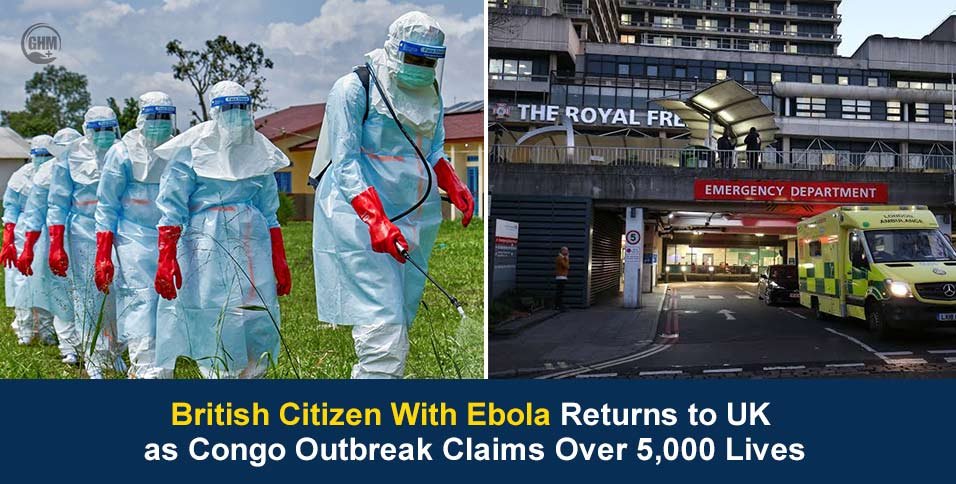
A British doctor who contracted Ebola while supporting the outbreak response in the Democratic Republic of Congo (DR Congo) has returned to the UK for specialist treatment. The patient arrived on November 5, 2026, following a medical evacuation organised jointly by the UK and DR Congo governments. Doctors are treating the British citizen with Ebola in a high-level isolation unit at London’s Royal Free Hospital. The UK Health Security Agency (UKHSA) has confirmed that established Ebola infection-control measures are in place and the risk to the wider public remains low.
The case marks the first confirmed infection involving a British national during the current Ebola outbreak in DR Congo, which has recorded more than 10,000 confirmed cases and over 5,000 deaths.
British Ebola Patient Receives Specialised Treatment
The British citizen with Ebola arrived at RAF Northolt in London aboard a medical evacuation flight before an emergency medical convoy transferred the patient to the Royal Free Hospital in north London.
Authorities have not publicly disclosed the patient’s identity. The individual is receiving care in the hospital’s specialist high-level isolation unit, which handles serious infectious diseases requiring strict containment measures.
The facility operates with a dedicated team of doctors, nurses, and laboratory professionals. Its infection-control arrangements include:
- Restricted access to the Ebola isolation unit.
- Specialised patient enclosures and controlled ventilation.
- Personal protective equipment (PPE) for healthcare workers.
- Strict handling and sterilisation of clinical samples and medical waste.
The Royal Free Hospital has previous experience treating Ebola infection in healthcare workers.
During the 2014–2015 West African outbreak, it treated three infected health workers who were evacuated to the UK. All three recovered.
UK Health Security Agency Says Ebola Public Risk Remains Low
The UK government and health authorities have stressed that the British doctor with Ebola is receiving care under established national infection-control procedures.
Dr Renu Bindra, deputy director for All Hazards Public Health Response at UKHSA, said: “UKHSA and the NHS have well-established and robust infection prevention and control protocols to limit the risk of onward transmission, and the risk to the wider public remains low.”
The Department of Health and Social Care has also indicated that authorities do not expect the imported UK Ebola case to have a serious public health impact. No disruption to international travel or trade is anticipated.
The treatment of the British citizen with Ebola in a controlled isolation environment aims to prevent exposure among hospital staff and members of the public.
Ebola Outbreak in DR Congo Records Over 10,000 Cases
The British citizen with Ebola is linked to the ongoing Bundibugyo virus outbreak in DR Congo. The Ebola outbreak, declared in May 2026, has become the second-largest recorded outbreak.
Reported figures indicate:
- More than 10,000: Confirmed Ebola infections.
- Over 5,000: Reported deaths.
- 48.6%: Reported fatality rate at the end of October 2026.
The Ebola outbreak in DR Congo has also raised concerns beyond DR Congo, with Ebola cases reported in Kenya, Nigeria and Uganda. Several other European nationals have contracted the disease in recent months, including people returning from humanitarian or healthcare work.
What Is the Bundibugyo Virus and How Does Ebola Spread?
Bundibugyo virus is a variant of the Ebola virus that causes a severe infectious disease. Ebola primarily spreads through direct contact with the blood and other bodily fluids of infected people or deceased patients.
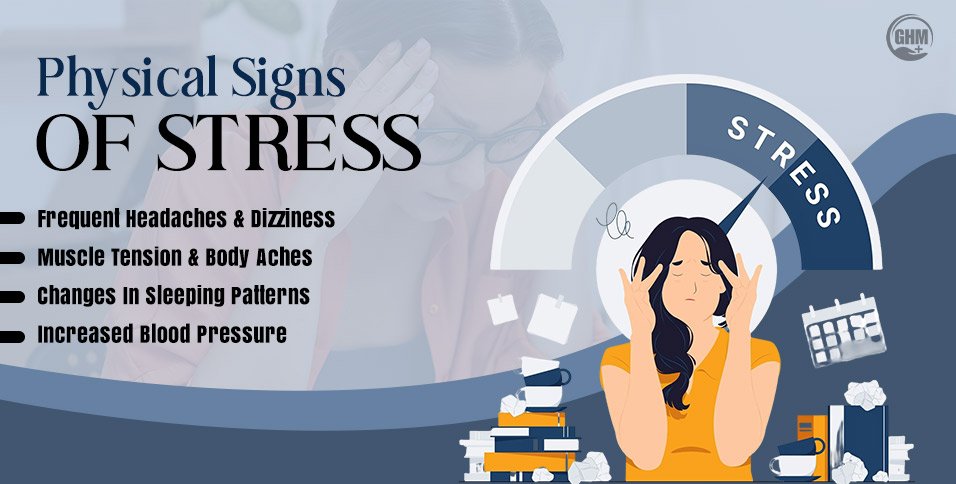
Ebola Symptoms generally develop between two and 21 days after exposure. Early signs include:
- Fever, fatigue, and muscle aches.
- Headaches and general body pain.
- Vomiting and diarrhoea.
- Unexplained bleeding in severe cases.
Ebola can cause serious complications, including severe fluid loss, electrolyte imbalances and organ failure. The World Health Organization (WHO) estimates that Ebola kills about half of those infected on average, although fatality rates vary between outbreaks.
What Treatment Options Are Available for Ebola Patients in UK?
Doctors will assess the British citizen with Ebola and monitor the progression of the infection. Treatment for Ebola focuses on managing symptoms and preventing complications through supportive medical care.
This may include intravenous fluids to address dehydration, monitoring electrolyte levels, checking vital signs, and assessing organ function.
There are currently no approved vaccines or specific treatments for the Bundibugyo variant. However, researchers are investigating potential therapies through clinical trials.
The WHO-supported Partners clinical trial in DR Congo is examining remdesivir, the monoclonal antibody MBP134, and their combined use to determine whether they can improve patient survival.
As the Ebola outbreak in DR Congo continues, health authorities will need to maintain strict infection-control measures and monitor developments to limit further transmission.