Frequent headaches, dizziness, eye strain, motion sensitivity, and reading trouble are disruptive daily symptoms often blamed on general stress, chronic migraines, excessive screen use, or inner-ear problems. When treatments for these common culprits fail to provide lasting relief, one possible contributor may be an overlooked eye-teaming issue known as binocular vision dysfunction (BVD). Originating in the physical coordination of the eyes, this condition can cause a wide range of debilitating symptoms far beyond blurry vision.
The information provided in this article is strictly educational and is not intended for self-diagnosis or to replace clinical advice. Because BVD symptoms can closely overlap with other systemic or neurological conditions, any persistent or unexplained symptoms should always be thoroughly evaluated by a qualified healthcare provider or specialized eye-care professional.
What Is Binocular Vision Dysfunction?
To understand binocular vision dysfunction, it helps to first understand how normal vision operates. Binocular vision refers to the complex way both eyes work together to create a single, clear image. Essentially, the brain takes two separate pictures—one from each eye—and merges them into one seamless view.
Binocular vision dysfunction occurs when the eyes do not coordinate or align properly. When eye teaming is disrupted, the brain must work harder to combine the mismatched signals. Importantly, a person can have perfectly clear eyesight or 20/20 vision on a standard eye chart and still experience eye-teaming issues, as clarity is only one part of the visual system.
The constant struggle to keep visual input unified creates significant strain. As the visual system may work harder to maintain a single image, this unseen effort leads to physical discomfort and chronic symptoms.
Why BVD Symptoms Are Often Misdiagnosed
Binocular vision dysfunction is frequently missed in clinical settings because its physical manifestations closely overlap with a wide variety of non-eye-related medical conditions. As a result, individuals may spend years seeking help for persistent headaches, chronic dizziness, anxiety-like symptoms, neck tension, motion sickness, or daily reading fatigue without realizing their eyes may be the primary source of the problem.
The brain and visual system are deeply connected to the body’s mechanisms for balance, posture, and spatial awareness. When a visual misalignment occurs, it can send confusing signals that disrupt these other systems. Because these symptoms can overlap with migraine, vertigo, anxiety, sinus pressure, or digital eye strain, many people do not immediately connect them with underlying binocular vision problems.
This significant diagnostic overlap means patients often undergo multiple tests with various specialists—receiving a clean bill of health for their inner ear or neurological systems—while the visual coordination issue remains unaddressed.
Common Symptoms of Binocular Vision Dysfunction
The signs of binocular vision dysfunction can vary significantly from person to person. Symptoms often appear or worsen during visually demanding tasks like reading, extended screen use, driving, walking in busy public places, or working under bright lights.
If you have a binocular vision issue, you might experience:
- Frequent headaches or migraine-like discomfort, particularly building at the forehead after focus-heavy tasks.
- Eye strain, tired eyes, or a deep soreness in the eyes themselves.
- Blurred or double vision that comes and goes throughout the day.
- Dizziness, unsteadiness, or balance problems.
- Motion sickness, especially when traveling in a car or walking through repetitive environments like grocery store aisles.
- Light sensitivity, often worsened by fluorescent lighting or high-contrast patterns.
- Severe neck, shoulder, or facial tension, as the body unconsciously changes its posture to stabilize the visual system.
Cognitive and performance-related symptoms are equally common. You may have persistent trouble reading for long periods because the words seem to move. Many people skip lines while reading or need to use a finger to keep their place on the page. Poor concentration during visual tasks can occur as the brain uses excessive energy just to keep the image stable. Finally, individuals often report feeling overwhelmed, anxious, or disoriented in visually busy environments like shopping malls, as the brain cannot efficiently process the sheer volume of spatial information.
Conditions BVD Is Commonly Mistaken For
Because binocular vision dysfunction shares symptoms with so many other issues, it is highly prone to misdiagnosis.
Migraine or Tension Headaches: Recurring headaches that flare up after reading, intense screen work, or close-up focus may sometimes have a visual component. Eye-teaming strain may contribute to headache symptoms, especially after prolonged reading, screen use, or other close-focus tasks.
Vertigo or Vestibular Problems: Dizziness, a sense of imbalance, or physical discomfort in motion-heavy environments may easily be mistaken for inner-ear issues. However, if standard vestibular tests are normal, the visual input to the balance system may be at fault.
Anxiety or Panic Symptoms: Visual sensory overload, dizziness, and spatial disorientation can trigger a fight-or-flight response. This can feel exactly like anxiety or panic symptoms, especially when triggered by crowded, highly patterned, or exceptionally bright places.
ADHD or Learning Difficulties: Children or adults presenting with reading fatigue, poor focus, or skipped lines may be misjudged as simply inattentive or suffering from learning disabilities. When visual coordination actively contributes to the struggle, avoiding near-point tasks is a natural adaptation rather than an attention disorder.
Sinus Pressure or Facial Discomfort: Eye strain and visual effort can sometimes be perceived as pressure around the eyes, forehead, or face. This localized fatigue can sometimes feel remarkably like deep pressure around the forehead, eyes, or face, often mimicking chronic sinus issues.
Digital Eye Strain: While digital computer screens can worsen visual symptoms due to glare and poor contrast, the root issue may not always be screen use alone, but rather a pre-existing binocular coordination deficit.
Why a Standard Eye Exam May Not Always Catch BVD
Reading the bottom line on a standard eye chart does not necessarily mean your visual system is working perfectly. There is an important difference between a routine eye exam and a specialized binocular vision evaluation.
Standard eye exams are designed primarily to check visual clarity, determine prescription needs for glasses, and assess the physical health of the eye. Conversely, binocular vision dysfunction involves how both eyes work together over time. Because of this distinction, someone may easily pass a static vision screening with 20/20 eyesight but still experience severe daily symptoms when they actively use their eyes for work or reading.
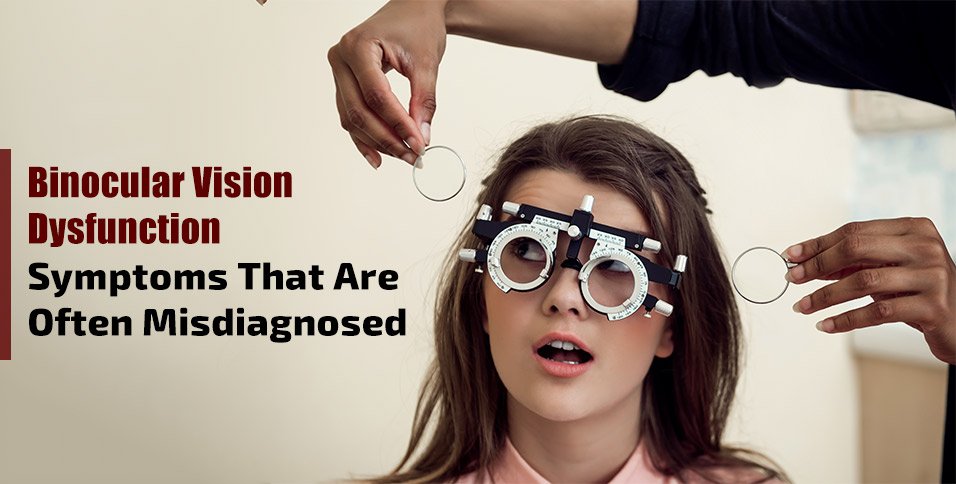
A specialized binocular evaluation looks deeply at subtle eye alignment, eye teaming endurance, focusing ability, and how efficiently the brain processes spatial input from both eyes under various levels of cognitive stress.
When Should You Consider a Specialized Eye Evaluation?
It may be worth discussing a specialized binocular vision evaluation with an eye-care professional if your daily symptoms keep returning despite normal medical test results. Practical signs that you might benefit from further evaluation include headaches or dizziness that reliably happen after reading or heavy screen use. You might also notice that busy environments make your symptoms rapidly worse, or that simply closing one eye temporarily improves your visual comfort.
Other indicators include reading feeling unusually tiring, driving—especially at night—causing significant visual discomfort, or motion sickness and balance issues actively interfering with your daily life.
Safety Note: Sudden double vision, severe headaches, physical weakness, confusion, sudden vision loss, or stroke-like symptoms should always be treated as urgent medical emergencies and evaluated immediately by medical professionals.
How BVD May Be Managed
Treatment depends on the individual case and should always be guided by a qualified eye-care professional. Possible management options include therapeutic prism lenses, corrective lenses, specialized vision therapy, and eye coordination exercises. Professionals may also recommend practical adjustments for screen use or reading habits, alongside follow-up care based on your symptom response.
Final Thoughts
Binocular vision dysfunction is frequently overlooked because its symptoms look like other medical conditions. Persistent headaches, dizziness, reading trouble, motion sensitivity, and eye strain deserve a closer look when left unexplained. Seek proper evaluation rather than ignoring recurring symptoms or assuming they are only caused by temporary stress, screens, or fatigue.