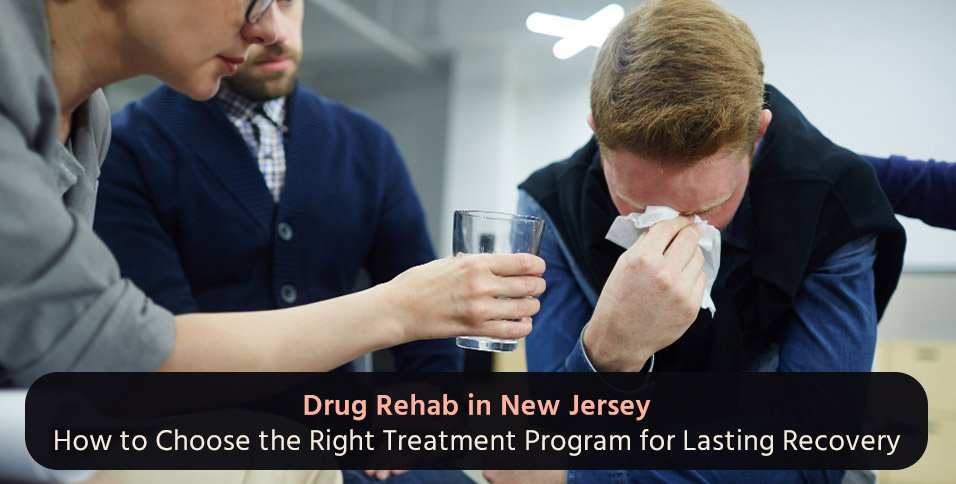
New Jersey is in the middle of one of the most serious substance abuse crises in the country. According to the New Jersey Department of Health, more than 2,800 residents lost their lives to drug overdoses in 2023, and fentanyl was detected in 78% of those fatalities. While those numbers have started to decline for the first time in years, the underlying need for accessible, high-quality drug rehab in New Jersey has never been greater.
Approximately 464,000 New Jersey residents aged 12 and older experienced a substance use disorder in the past year, according to data from the Substance Abuse and Mental Health Services Administration (SAMHSA). Yet 65% of those individuals never received any form of treatment. That gap between need and access is where choosing the right rehab program becomes a life-altering decision.
If you or someone you love is considering drug rehab New Jersey, this guide breaks down the treatment landscape, what to look for in a quality program, and how insurance can make the process more affordable than you might expect.
Understanding Levels of Care in New Jersey Drug Rehab
Not every person struggling with addiction needs the same intensity of treatment. The American Society of Addiction Medicine (ASAM) defines a continuum of care that ranges from outpatient counseling to medically managed inpatient treatment. Most drug rehab centers in New Jersey offer some combination of the following levels.
Medical Detox
Detoxification is the clinical process of managing withdrawal symptoms under medical supervision. For substances like opioids, benzodiazepines, and alcohol, withdrawal can be physically dangerous and even life-threatening without proper oversight. Detox is not treatment in itself but rather the first step that stabilizes a patient enough to engage in therapy.
Partial Hospitalization Program (PHP)
PHP is the most intensive form of outpatient care. Patients attend structured programming for five to six hours a day, five to seven days a week, while returning home or to supportive housing in the evening. PHP is appropriate for individuals stepping down from inpatient care or those with moderate-to-severe symptoms who do not require 24-hour supervision. Treatment typically includes individual therapy, group sessions, psychiatric evaluation, medication management, and crisis stabilization.
Intensive Outpatient Program (IOP)
IOP provides nine to fifteen hours of therapeutic programming per week, usually spread across three to five sessions. This level of care is designed for individuals who need structured support but can maintain daily responsibilities such as work, school, or family obligations. IOP is commonly used as a step-down from PHP, as early intervention for emerging addiction issues, or as a re-entry point after relapse.
Standard Outpatient and Aftercare
Once a patient completes PHP or IOP, ongoing outpatient therapy and aftercare planning help maintain long-term sobriety. This can include weekly individual therapy, alumni support groups, relapse prevention education, and medication-assisted treatment (MAT) for opioid use disorder.
What to Look for in a New Jersey Drug Rehab Program
The difference between an effective rehab program and one that produces poor outcomes often comes down to a handful of measurable quality indicators. When evaluating a drug rehab in New Jersey, look for the following.
- Accreditation and Licensing. Programs accredited by The Joint Commission or CARF have met rigorous clinical and operational standards. Additionally, verify that the facility holds a valid license from the New Jersey Division of Mental Health and Addiction Services (DMHAS). LegitScript certification is another strong indicator of legitimacy, and it is required for any treatment center running advertising through Google.
- Licensed Clinical Staff. Quality programs employ licensed professionals, including Licensed Clinical Social Workers (LCSWs), Licensed Professional Counselors (LPCs), Licensed Clinical Alcohol and Drug Counselors (LCADCs), psychiatrists, and registered nurses. Ask whether the facility has a named Medical Director overseeing care.
- Evidence-Based Treatment Modalities. Look for programs that use clinically validated approaches such as Cognitive Behavioural Therapy (CBT), Dialectical Behaviour Therapy (DBT), trauma-informed care models, Motivational Interviewing (MI), and medication-assisted treatment. Avoid facilities that rely solely on unproven or non-clinical methods.
- Dual Diagnosis Capability. SAMHSA estimates that roughly 8 million Americans live with co-occurring substance use and mental health disorders. A quality New Jersey drug rehab should have integrated treatment for anxiety, depression, PTSD, bipolar disorder, and other psychiatric conditions alongside addiction.
- Individualized Treatment Plans. Effective programs do not apply a one-size-fits-all approach. The initial assessment should produce a personalized treatment plan based on the patient’s substance use history, mental health status, medical needs, family dynamics, and personal recovery goals.
Insurance Coverage for Drug Rehab in New Jersey
One of the most common barriers to entering treatment is the belief that rehab is unaffordable. In reality, New Jersey has some of the strongest insurance mandates for substance abuse treatment in the nation. The federal Mental Health Parity and Addiction Equity Act (MHPAEA) of 2008 requires health insurers to cover mental health and substance use treatment at the same level as physical health services. New Jersey strengthened these protections further through state legislation signed in 2019, which requires insurers to submit annual compliance reports to the Department of Banking and Insurance.
Major insurance carriers that cover drug rehab in New Jersey include Horizon Blue Cross Blue Shield of New Jersey, AmeriHealth, Aetna, Cigna, UnitedHealthcare, and NJ Family Care (Medicaid). Coverage typically extends to detox, inpatient treatment, PHP, IOP, outpatient therapy, MAT, and aftercare services. Most reputable treatment centers offer free insurance verification before admission so patients can understand their coverage, copays, and out-of-pocket costs upfront.
Taking the First Step Toward Recovery
Choosing a drug rehab in New Jersey is one of the most consequential decisions a person or family can make. The right program provides not just clinical treatment but a foundation for rebuilding relationships, restoring mental health, and developing the coping skills necessary for sustained sobriety.
Start by verifying your insurance benefits, researching facility accreditations, and scheduling a confidential assessment. Many New Jersey treatment centers offer same-day or next-day admissions for individuals ready to begin. Recovery is not a straight line, but with the right level of care and the right clinical team, it is always within reach.
About the Author
This article was contributed by the clinical team at Freedom Recovery Center, a Joint Commission-accredited addiction treatment facility located in Manalapan, New Jersey. Freedom Recovery Center offers Partial Hospitalization (PHP) and Intensive Outpatient (IOP) programs for adults and young adults struggling with substance use disorders and co-occurring mental health conditions. Learn more at freedomrecoverynj.com or call (844) 910-1237 for a confidential assessment.