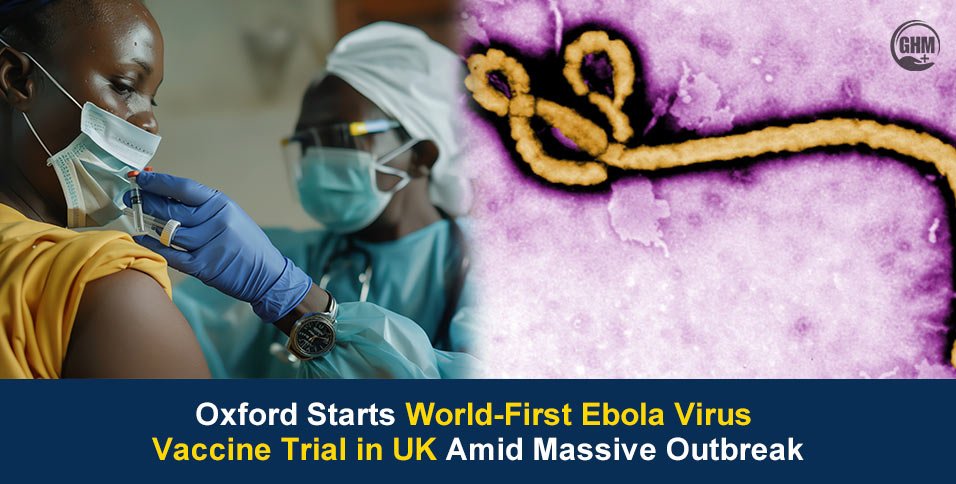
The University of Oxford has officially launched the world’s first Phase I clinical trial of a vaccine specifically targeting the Bundibugyo ebolavirus. The groundbreaking Ebola virus vaccine trial in UK comes as a direct response to the expanding Ebola outbreak in DR Congo and neighbouring Uganda, which was declared a public health emergency of international concern.
Fifty healthy volunteers aged 18–55 are currently being recruited in the UK to participate in the initial safety study. This Phase I Bundibugyo ebolavirus trial marks a critical moment for global health security as there is currently no licensed vaccine or approved treatment available for the Bundibugyo species, despite the availability of vaccines for other strains.
With international Ebola cases climbing rapidly, urgent demand for a dedicated solution has forced global health organizations to fast-track this dedicated vaccine candidate.
Inside Oxford’s Phase I Bundibugyo Ebolavirus Trial
The world-renowned Oxford Vaccine Group is conducting the newly initiated clinical study named the BD-Ebov trial.
Ebola virus vaccine trial in UK: Framework & Objectives
- Participants: 50 healthy adults aged 18–55 based in Oxford, UK.
- Primary Objectives: Rigorously evaluate safety, tolerability, and the specific immune response generated by the vaccine.
- Timeline: Recruitment is actively underway, with vaccinations expected to commence in the coming weeks following final regulatory approvals. Participants will be monitored intensively over several months to a full year using detailed medical diaries and routine blood tests.
“Launching this first-in-human study of a Bundibugyo ebolavirus vaccine is an important milestone for the programme and the culmination of a significant effort by teams across vaccine development, manufacturing and clinical testing,” said Dr. Katrina Pollock, Chief Investigator at the Oxford Vaccine Group.
New Ebola Vaccine Development Took 8 Weeks Record Time
Remarkably, this Oxford Ebola vaccine development is a historic milestone, as the period between design and the first human trial of Ebola vaccine is roughly eight weeks. The trial is made possible by the Oxford Ebola vaccine platform, the ChAdOx1 viral vector. This is the exact same underlying technology utilized to build the AstraZeneca COVID-19 vaccine by Oxford.
The ChAdOx1 viral vector platform uses a harmless, modified common cold virus to deliver genetic instructions into the body. The vaccine instructs cells to produce a single, harmless viral protein from the Ebola virus, training the immune system to recognize the threat without causing an actual infection.
Comprehensive preclinical animal testing of the Ebola virus vaccine in mice and primates was successfully completed before moving to human subjects.
Global Collaboration For Ebola Vaccine Development
The rapid scaling of this Ebola vaccine development in UK relies on an unprecedented international coalition.
Core funding and manufacturing support for Ebola Vaccine include:
- The Coalition for Epidemic Preparedness Innovations (CEPI): Providing US$8.6 million in vital funding support.
- The Serum Institute of India (SII): Manufactured and stockpiled approximately 620,000 doses of the vaccine in just two weeks to ensure global readiness.
- African Research Partners: Parallel preparations are underway for clinical studies involving 110 volunteers in Uganda, coordinated by the Medical Research Council/Uganda Virus Research Institute and the London School of Hygiene & Tropical Medicine Uganda Research Unit.
Next Steps In The Ebola Virus Vaccine Trial in UK
If the first Bundibugyo ebolavirus vaccine passes its Phase I safety checks, it will immediately progress to larger Phase II and Phase III efficacy studies as early as October.
Partners developing the vaccine intend to utilize an emergency-use authorization pathway, allowing the experimental shot to be deployed actively to ring-fence infections in affected African countries.
The overarching goal of the CEPI and Serum Institute alliance is to ensure rapid, affordable, and equitable vaccine access to the vulnerable populations that need it most.
Oxford’s first-in-human Bundibugyo Ebola virus vaccine trial in UK clinical sites marks a critical milestone in modern outbreak response. It establishes a robust blueprint for stopping future epidemic threats before they transform into global pandemics.