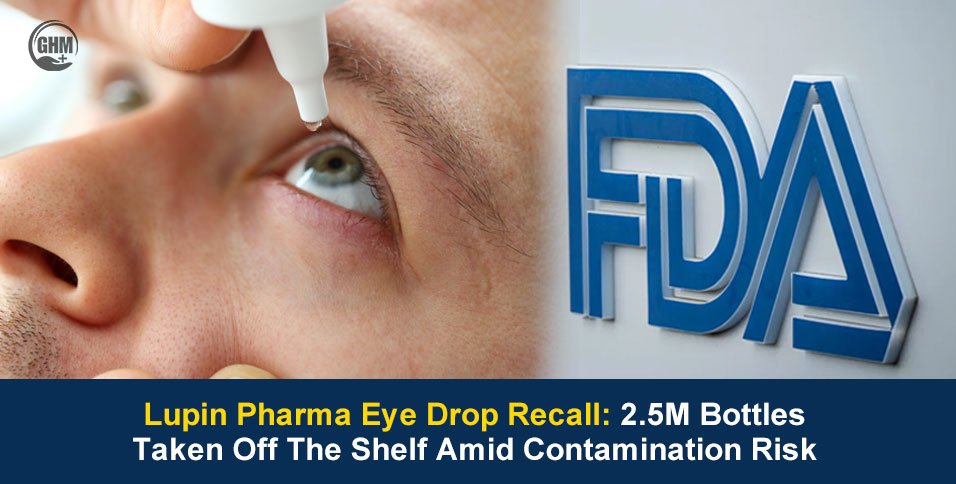
The U.S. Food and Drug Administration (FDA) has announced a major, nationwide Class II recall involving more than 2.53 million prescription eye drop bottles manufactured by Lupin Limited. The Lupin Pharma eye drop recall was issued after the potential presence of a foreign substance or particulate matter in certain distribution lots.
The affected medication, Prednisolone Acetate Ophthalmic Suspension, is a widely prescribed steroid eye drop crucial for reducing redness, swelling, and inflammation caused by eye surgery, allergies, and severe inflammatory eye conditions.
This massive prescription eye drop recall by FDA has raised immediate safety concerns, prompting patients, pharmacists, and ophthalmologists across the country to verify their current medication supplies.
Why Was The Class II FDA Recall Issued for Eye Drops?
The Lupin Pharma eye drop recall process began voluntarily on June 4, 2026, when Lupin Pharmaceuticals Inc. initiated a retail-level pull of specific product batches. The issue originated from a single market complaint reporting foreign particulate matter found inside a product container. This led to foreign substance contamination in the Lupin Pharmaceuticals eye drops.
Following a health hazard assessment, the FDA escalated the situation by classifying it as a Class II FDA recall. According to official FDA criteria, a Class II designation is issued when exposure to a violative product may cause temporary or medically reversible adverse health consequences.
To date, neither the FDA nor Lupin has publicly identified the exact composition of the material.
Which Eye Drops Are Included in the FDA Recall?
The ongoing Lupin Pharma eye drop recall specifically impacts eye drop bottles distributed nationwide across the United States.
The specific details of the recalled eye drops include:
- Product Name: Prednisolone Acetate Ophthalmic Suspension, USP, 1% (Rx Only)
- Manufacturer: Lupin Limited (India)
- Total Affected Volume: 2,530,182 bottles
The Prednisolone Acetate eye drop recall covers three specific bottle sizes with the following National Drug Codes (NDCs):
- 5 mL Bottles: NDC 70748-332-02
- 10 mL Bottles: NDC 70748-332-03
- 15 mL Bottles: NDC 70748-332-04
The FDA Lupin Pharma eye drop recall includes dozens of unique lot codes with expiration dates extending from July 31, 2026 to March 31, 2028.
What Is Prednisolone Acetate Used For?
Prednisolone Acetate Ophthalmic Suspension is a generic equivalent to Allergan’s Pred Forte. It is a strong steroid eye drop primarily used to treat non-infectious, steroid-responsive eye inflammation.
Doctors prescribe these prednisolone eye drops to help manage:
- Post-operative eye inflammation following surgeries
- Severe eye allergies and irritation
- Damage from thermal or chemical burns
- Redness, severe itching, and swelling affecting the cornea, conjunctiva, and anterior segment of the eye.
What Are The Risks of Contaminated Eye Drops?
Using a contaminated ophthalmic solution carries unique risks because the eye is highly sensitive. The health hazard assessment associated with the Lupin Pharma eye drop recall warns that exposure to foreign particulate matter can lead to several complications:
- Mechanical Irritation: Tiny foreign objects can scratch or scrape the sensitive surfaces of the eye.
- Corneal Injury: Scratches on the cornea can impair vision and cause severe discomfort.
- Secondary Ocular Inflammation: The presence of unexpected material can trigger additional, severe inflammatory responses.
- General Eye Discomfort: Victims may experience pain, redness, or discharge requiring urgent medical attention.
What Should Patients Do If They Have Recalled Eye Drops?
If you currently use prednisolone eye drops, do not panic, but take immediate practical steps:
- Check Your Bottle: Cross-reference the bottle size, NDC, and lot number with the official FDA enforcement report.
- Consult Your Doctor: Do not abruptly stop using your prescription steroid eye drops without medical advice, as stopping steroids suddenly can cause rebound inflammation.
- Contact Your Pharmacist: Reach out to your prescribing ophthalmologist or pharmacy immediately to secure a safe replacement medication from an unaffected lot.
- Report Adverse Effects: If you experience unexpected irritation or vision changes, report them promptly via the FDA MedWatch Adverse Event Reporting program.
What Healthcare Providers and Pharmacies Should Know?
Healthcare professionals, clinics, and pharmacies must act swiftly to limit patient exposure:
- Quarantine Inventory: Immediately remove any affected Lupin Pharmaceuticals eye drop bottles from dispensing areas and move them to secure quarantine.
- Stop Dispensing: Halt the distribution of all recalled lot numbers.
- Notify Patients: Proactively contact patients who recently filled prescriptions for Prednisolone Acetate Ophthalmic Suspension to verify their lot codes.
- Source Replacements: Secure alternative replacement stock before resuming normal dispensing of this critical anti-inflammatory medication.