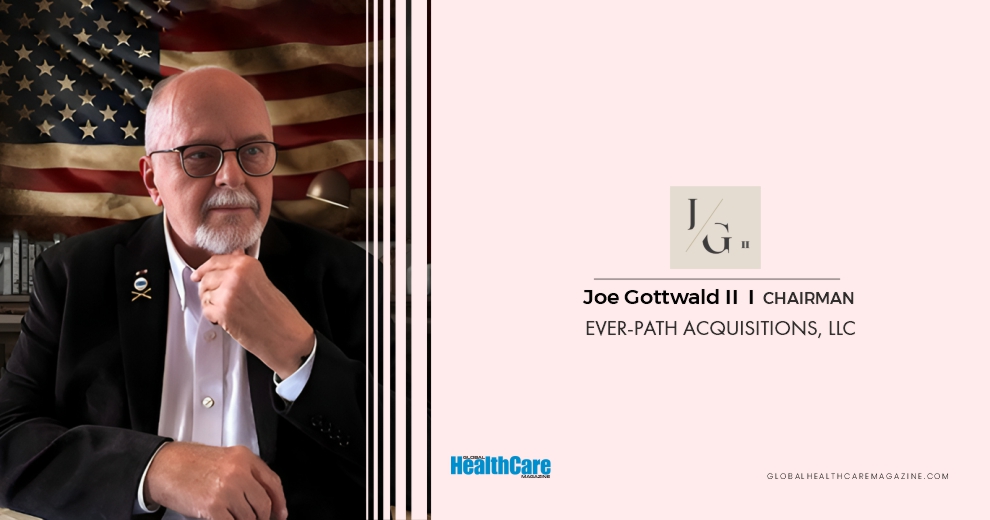
The corner office. It is forged in the dirt, in the high-stakes friction of the moment, and in the quiet decisions made when no one is watching. There is a moment in the life of Joe Gottwald II (Joseph A. G.) that explains everything about how he views the world, and more specifically, how he views leadership. It did not happen in a boardroom in San Diego, where his new company, Ever-Path Acquisitions, LLC, is currently headquartered. It happened decades ago on a hand grenade training range.
Joseph was the officer training a soldier. The command was simple: pull the pin and throw. But fear has a way of short-circuiting motor skills. The student pulled the pin, but instead of throwing the weapon downrange, he froze and tossed the live grenade directly above their heads.
In that fraction of a second, the calculus of survival stripped away everything superficial. There was no time for a meeting. There was no time to consult a manual. There was only the objective reality of a threat and the immediate necessity of action. Joseph realized they had one chance. He removed his helmet, used it to deflect the grenade away from their position, and shoved the student down behind the safety wall, shielding the man with his own body until the explosion rattled the earth.
“I always thought leadership was making the best decisions, then carrying out your plan of action to the absolute best of your ability,” Joseph says.
Today, the threat is less kinetic but no less lethal. The system Joseph is trying to save is not a terrified soldier, but the North American healthcare infrastructure. As the Chairman of Ever-Path Acquisitions, LLC, and a seasoned author, Joseph is looking at a landscape that is fracturing under administrative weight, burnout, and inefficiency. He is not looking to deflect a grenade; he is looking to deploy a new kind of tool, Artificial Intelligence, to keep the system from imploding.
The Mission: Service before Software
To understand Joseph’s approach to technology, you have to understand who he is serving. He is not building software for the sake of innovation. He is building it because he has examined the logistical realities of a nurse’s life and found them unacceptable.
Joseph describes the scenario with the precision of a logistics officer. A nurse finishes a gruelling 12 or 13-hour shift. Their feet are aching; their mental reserves are tapped. Yet, instead of going home to rest, they must sit down and enter notes and orders that could not be completed amid the chaos of patient care. It is a bottleneck that bleeds time and morale.
“My key passion with Ever-Path Acquisitions, LLC, is to develop SaaS platforms that can lift the leadership of healthcare organizations up to the next level,” Joseph explains.
He envisions an AI-augmented program that can compress that documentation time to 30 minutes or less. It is not about replacing the human; it is about liberating them. “It’s not that the nurses are going to all of a sudden [be] super typists,” Joseph notes, “but, moreover, able to better utilize the time they have between patient calls.”
This is the intersection where Joseph operates. He brings the strategic genius of knowing why we do things—to care for people—and the humble wisdom of asking who is suffering when the system fails.
The Landscape of Crisis
Joseph’s current mission is informed by a staggering amount of research. His latest book, Healthcare: A System in CRISIS, co-authored with his friend Bill Adams Jr., is the result of over six years of research and nearly two years of writing. Released in December 2025, the book serves as a cornerstone for understanding the urgent need for AI solutions across retirement communities and the broader healthcare sector.
The context for this book, and for Joseph’s work, is laid out in The AI Compendium, a publication he edits. The statistics are telling. More than 35% of healthcare organizations worldwide have adopted some form of AI technology, a number expected to surpass 50% by 2026. In the United States alone, AI-powered diagnostic tools are utilized in over 30% of hospitals.
Yet, adoption does not equal optimization. Joseph sees a gap between the availability of these tools and the “management effectiveness” required to use them. Healthcare companies are aiming to reduce costs and lower Emergency Department wait times. They are trying to assist trauma care specialists with diagnostics. But without the right strategic vision, these remain isolated upgrades rather than systemic fixes.
Joseph’s goal is to close the gap between “where we are and where we want to be in the administration and utilization of healthcare modalities.” He states that leaders must ensure transparency and promote ethical use to stay competitive.
The Soldier’s Mindset in the Boardroom
Joseph’s professional journey is a testament to the idea that skills transfer, but character is constant. Enlisting during the height of the Vietnam War and later attending Officer Candidate School (OCS), he forged a mindset that rejects the concept of impossibility.
“My mindset was developed early on in my Military career when the words ‘can’t’ or ‘impossible’ were completely and utterly wiped from my vocabulary,” Joseph says. “In the military, ‘Can’t’ does not exist. You find a way to accomplish the mission.”
This is not a platitude for Joseph. It is an operating system. When a problem arises, he applies the military discipline of the “After Action Review.” He examines how the problem was solved, dissects the variables, and prepares to do it better next time.
This disciplined approach was evident in his success with the Healthcare company, where he served as Chairman and CEO and led it from a startup to an acquisition in just four years. It is the same methodology he is applying to Ever-Path Acquisitions, LLC, a startup established in 2025.
Working alongside Nathan Pizano, a fellow veteran, good friend, and Founding President of the company, Joseph has assembled a leadership team built for heavy lifting. He describes Nathan as his closest stakeholder. Together, they have established a Board of Directors with over 252 years of combined experience in medical, healthcare, M&A, logistics, and Artificial Intelligence.
The team also includes Bill Adams Jr., the President of TARGATEK, Inc., a tech company specializing in leadership development through AI and Machine Learning. This network of “collaborators” is crucial because Joseph understands that in a complex environment, no single leader has all the answers.
The Ethical Frontier
While Joseph is a proponent of technology, he is not blind to its risks. As a member of the Board of Advisors at targa.ai, he contributes to cybersecurity initiatives and operational integration strategies.
In The AI Compendium, Joseph and his team highlight the ethical considerations that must accompany the rise of AI. They warn of “black box” models in which decisions are difficult to understand or to challenge. They discuss the risks of bias and fairness, noting that AI systems can inherit biases from training data, leading to unfair outcomes if diverse and representative data is not ensured.
Privacy is another major concern. The use of AI in healthcare involves sensitive patient data, requiring robust privacy protections. Joseph’s background as a Cybersecurity Advisor to the President and Chairman of TARGATEK gives him a unique vantage point on these vulnerabilities. He knows that trust is the currency of healthcare. If patients or providers lose faith in the system’s security, the technology becomes useless.
The book Healthcare: A System in CRISIS advocates for “improved, more informed leadership.” It highlights how AI and Machine Learning can work together to improve human performance on analytical tasks while “preserving the human element.”
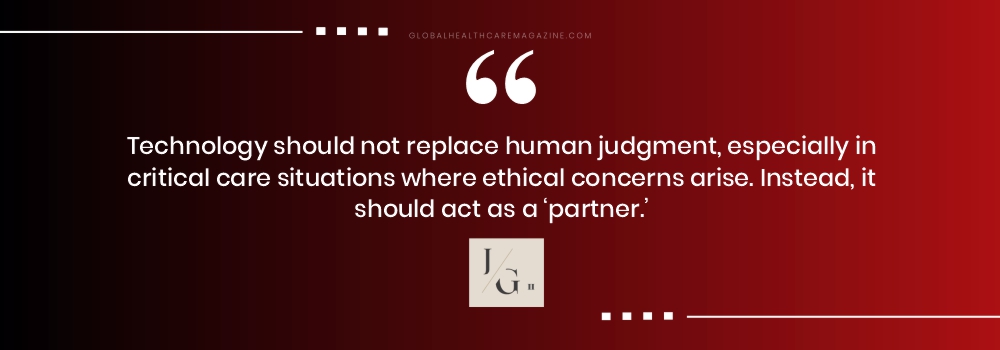
This is the core of Joseph’s philosophy: technology should not replace human judgment, especially in critical care situations where ethical concerns arise. Instead, it should act as a “partner.”
The Man behind the Mission
Despite the gravity of his work, rescuing a healthcare system in crisis, advising on cybersecurity, and leading startups, Joseph remains deeply grounded. When asked about work-life balance, he offers a refreshing honesty.
“I don’t know any executives who have a perfect work-life balance,” Joseph admits.
He does not claim to have a secret formula for time management. Instead, he points to his relationships. His wife, he says, is his “grounding rod,” helping him keep his focus on what matters most: family and grandchildren.
There is also “Big Bear,” his best K-9 friend. Joseph’s bio reveals a man of diverse and intense interests. He is a K-9 Search and Rescue (SAR) handler and a winning race car driver. These are not passive hobbies. They are pursuits that require the same traits he brings to the boardroom: high situational awareness, immediate reaction times, and a deep sense of responsibility for others.
Whether he is navigating a racetrack or a search-and-rescue grid, Joseph is solving dynamic problems.
The Future of Care
Joseph has recently retired from a career in real estate to focus entirely on this new healthcare venture with Nathan Pisano. He is currently the Chairman of his fourth successful startup.
His vision for the future is pragmatic. He wants to see Ever-Path Acquisitions, LLC, accomplish its goals of streamlining processes and advancing impactful solutions. He wants to see the global AI healthcare market, projected to reach $45 billion by 2027, actually deliver on its promise of better patient outcomes.
He sees a future where AI assists in forecasting disease outbreaks and preventing hospital readmissions. He sees a world where robotic surgery supports surgeons with precision and where virtual health assistants handle 20% of patient inquiries, freeing up human staff for complex care.
But mostly, he wants to finish the mission.
“When we have accomplished our goals, I’ll see what’s next,” Joseph says.
He plans to help introduce products like MedboxAI, an AI-infused medical device that looks like a sophisticated box where a patient sits, and MedboxAI measures the patient’s vital signs in minutes. MedboxAI is being introduced by Mr. Ansy Moncion of Veracorp, a medical products development company, and there is a handheld wand-like sonogram machine made that is small enough to put in your pocket and runs on batteries.
The healthcare system is in crisis. The tools to fix it are available. And Joe Gottwald II. is standing at the helm, helmet in hand, ready to clear the obstacles so that the nurses, doctors, and patients can finally find safety.
“Attempted and accomplished some difficult tasks,” Joseph reflects, “but if you ever want to really challenge yourself, write a book.” It is a humble statement from a man who has deflected grenades and built companies. But it speaks to his belief in the power of ideas.
To fix the system, he believes one must first understand it, describe it, and then, with the relentless discipline of a soldier, go about the work of repairing it.
Quotes