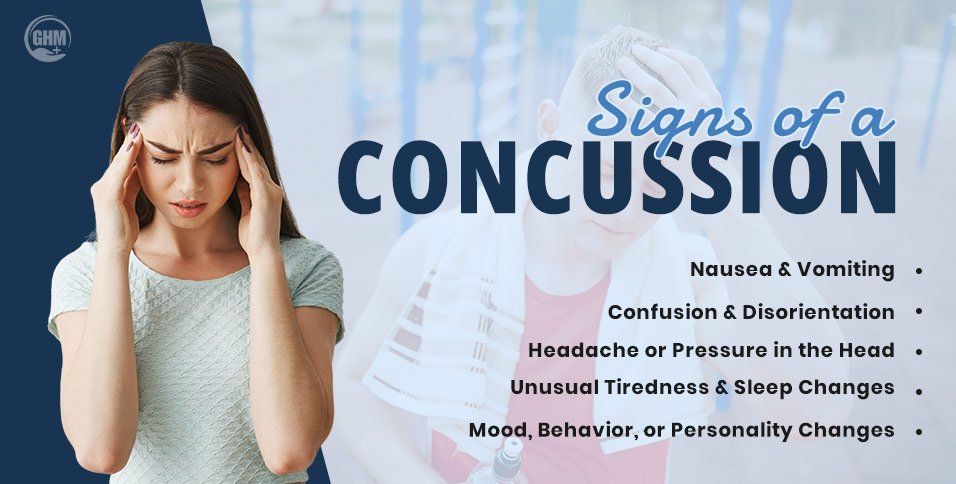
During a sporting event or any kind of accident, we can take a hard fall, suffer whiplash, or sustain a bump on the head. Mostly, it is easily brushed off as a sudden jolt to the body if there are no visible cuts or bleeding. However, it could lead to a concussion, affecting brain functions. The injury is not easy to recognize at the start, but the early signs of a concussion can give it away. Knowing these concussion symptoms can help you to take immediate action and seek medical care before complications arise.
This guide explains the common and early warning signs of a concussion in adults and infants, along with a list of precautions, so if you or someone you know experiences a head injury, you know what to do.
What Is a Concussion?
A concussion is a mild traumatic brain injury (mTBI) triggered by an impact, bump, or violent jolt that causes the brain to bounce or slide rapidly inside the inner walls of the skull. A concussion can happen mostly during falls, sports, and accidents. This sudden movement stretches brain cells and creates a temporary chemical imbalance.
Most people recover from concussion within 2 to 4 weeks with proper rest. But ignoring delayed warning signs can prolong recovery for months.
Never dismiss new or evolving symptoms of concussion simply because you felt fine right after the impact. It is very common to experience delayed concussion symptoms. While physical effects often appear immediately, cognitive and emotional symptoms frequently emerge 24 to 72 hours later as the brain attempts to handle daily demands.
To evaluate a head injury accurately, you must distinguish between physical signs and individual symptoms:
- Concussion Signs: Observable changes that caregivers, coaches, or bystanders notice (such as slurred speech, unsteadiness, or a dazed look).
- Concussion Symptoms: Internal experiences that the injured individual reports (such as a subtle headache, nausea, or feeling mentally foggy).
You do not need to lose consciousness to have a concussion. In fact, the vast majority of concussions occur without any loss of awareness. Also, a study says that only 10% of cases involve a concussion with loss of consciousness.
10 Main Symptoms and Signs of a Concussion
The signs of a concussion fall across four major domain categories: physical, cognitive, emotional, and sleep-related.
Here are the 10 core signs of a concussion to watch for following any head impact:
1. Headache or Pressure in the Head
A persistent headache or feeling of intense pressure inside the skull is the most common physical symptom of concussion following a head impact. Here, the pain levels can range from mild aching to severe throbbing. While a mild headache is expected during early recovery, a headache that progressively worsens over time requires emergency evaluation to rule out internal bleeding.
2. Dizziness & Poor Coordination or Balance
Due to a concussion, damage to the vestibular system during an impact frequently leads to unsteadiness, lightheadedness, and difficulty maintaining balance. Observers may notice the injured person swaying, stumbling, or dropping objects. According to clinical data, falls are the leading cause of concussions across all age groups, frequently resulting in symptoms such as poor coordination or balance.
3. Confusion, Disorientation, or a Dazed Appearance
A person suffering from a mild traumatic brain injury often appears stunned or visibly dazed. They may struggle to recall what activity they were doing right before the collision, forget the score of a game, or fail to recognize familiar surroundings. They might stand motionless or take longer than normal to process simple commands. All of these can be signs of a concussion.
4. Memory Loss and Difficulty Concentrating
Amnesia surrounding the injury event is a primary indicator of temporary brain dysfunction. The individual may ask the exact same question repeatedly, struggle to focus on conversations, or fail to retain new information, which can be signs of a concussion. Students recovering from a concussion often report severe concentration limits when attempting to read or complete schoolwork.
5. Nausea and Vomiting
After the impact to the head, Chemical changes and pressure alterations inside the brain can trigger sudden digestive distress, leading to persistent nausea or an upset stomach shortly after an injury. An isolated episode of nausea is relatively common. However, repeated vomiting can be a sign of concussion and may require an immediate visit to the emergency room.
6. Blurred / Double Vision, or Light Sensitivity
Impact forces on the head can affect visual processing pathways, causing fuzzy focus, double vision, or difficulty tracking moving objects. Additionally, as a sign of a concussion, normal ambient sunlight or fluorescent indoor lighting can feel painful, causing the injured person to squint or seek out dark rooms.
7. Slowed Responses and Changes in Speech
When the brain undergoes a temporary energy crisis due to the impact on the head, cognitive processing speed drops noticeably. The person may hesitate before answering basic questions or speak at a significantly slower pace than usual. If the injured person exhibits slurred speech or inability to form coherent sentences, they need medical care immediately.
8. Mood, Behavior, or Personality Changes
Brain injuries directly affect emotional regulation centers. The person may notice unexpected mood swings, unexplained sadness, heightened anxiety, or sudden outbursts of anger and irritability. Friends, teachers, and family members often spot these subtle personality shifts as the early warning signs of a concussion well before the injured individual recognizes them.
9. Unusual Tiredness and Sleep Changes
Brain repair requires immense cellular energy, which frequently shows as overwhelming physical and mental fatigue. Sleep disruptions due to concussion can work in both directions: some individuals sleep far more than usual, while others struggle with insomnia or wake up frequently throughout the night.
10. Sensitivity to Noise and Other Sensory Changes
As a sign of concussion, everyday environmental sounds—such as dishes clinking, background music, or television audio—can feel uncomfortably loud and overwhelming. Other sensory changes after concussion include ringing in the ears (tinnitus), a metallic taste in the mouth, or a temporary loss of smell.
Signs of a Concussion in Babies, Toddlers, and Older Children
When young children and infants encounter a head impact, they cannot articulate feeling dizzy, foggy, or nauseous. Parents and caregivers must rely entirely on subtle behavioral shifts and physical indicators to recognize a concussion.
- Infants and Toddlers (Ages 0–4): Watch for concussion symptoms such as inconsolable crying, refusal to nurse or eat, loss of interest in favorite toys, sudden changes in sleeping habits, and unsteady walking.
- School-Aged Children (Ages 5–12): Look for concussion symptoms such as increased temper tantrums, sudden academic struggles, clumsiness on the playground, delayed responses to instructions, and noticeable fatigue.
- Teenagers (Ages 13–17): Monitor for concussion symptoms such as memory issues, screen-induced headaches, moodiness, changes in social behavior, and a drop in sports-related performance.
When Concussion Symptoms Are a Medical Emergency
While most concussions resolve safely with proper management, a severe blow can cause dangerous bleeding or swelling inside the skull. You must call or visit the nearest emergency department immediately if any of the below warning signs of a concussion appear:
- A headache that progressively worsens or stays severe
- Repeated episodes of vomiting
- Seizures, twitching, or convulsions
- Slurred speech, numbness, or limb weakness
- One pupil noticeably larger than the other
- Clear fluid or blood draining from nose or ears
- Inability to wake up or extreme drowsiness
- Inconsolable crying or refusal to feed in infants
Essential Precautions After a Suspected Concussion
If you suspect that you or someone nearby has suffered a brain injury and is experiencing concussion, take these immediate safety steps:
- Stop Physical Activity Immediately: Never allow an athlete to return to play on the same day as a suspected head injury.
- Schedule a Clinical Exam: See a qualified healthcare provider within 24 to 48 hours for a professional neurological assessment.
- Prioritize Relative Rest: Limit cognitive load (such as heavy reading or intense screen time) and physical exertion for the first 24 to 48 hours.
- Maintain Adult Supervision: Ensure a responsible adult checks on the injured person regularly for the first 24 hours.
- Avoid Pain Medications That Increase Bleeding: Skip medications like aspirin, ibuprofen, or naproxen initially unless approved by a doctor, as these can increase bleeding risks.
- Avoid Alcohol and Sedatives: Do not consume alcohol or recreational drugs, as they mask evolving brain injury symptoms.
- Gradual Return Protocols: Follow a structured step-by-step return-to-learn and return-to-play protocol guided by a physician.
Conclusion
Recognizing the early signs of a concussion requires attention, awareness, and a willingness to take head injuries seriously. Even when an injury seems minor, changes in how someone feels or behaves deserve consideration. Parents, coaches, teachers, and family members can play an important role by noticing unusual changes and encouraging timely medical assessment.
Never assume that a head injury is harmless simply because its effects are not immediately apparent. When in doubt, seek professional medical guidance, and treat any emergency warning signs as a reason to get immediate help.
Taking the right steps early can support safer recovery and reduce the risk of further injury.
Frequently Asked Questions
- Is it safe to sleep after a concussion?
Yes, sleeping after a concussion is safe and vital for brain recovery, but only if the person is evaluated and does not exhibit any emergency danger signs such as unequal pupils, worsening headache, or repeated vomiting.
- What can be mistaken for a concussion?
Many physical injuries and medical conditions share overlapping symptoms like headaches, dizziness, and fatigue, causing them to be mistaken for a concussion.