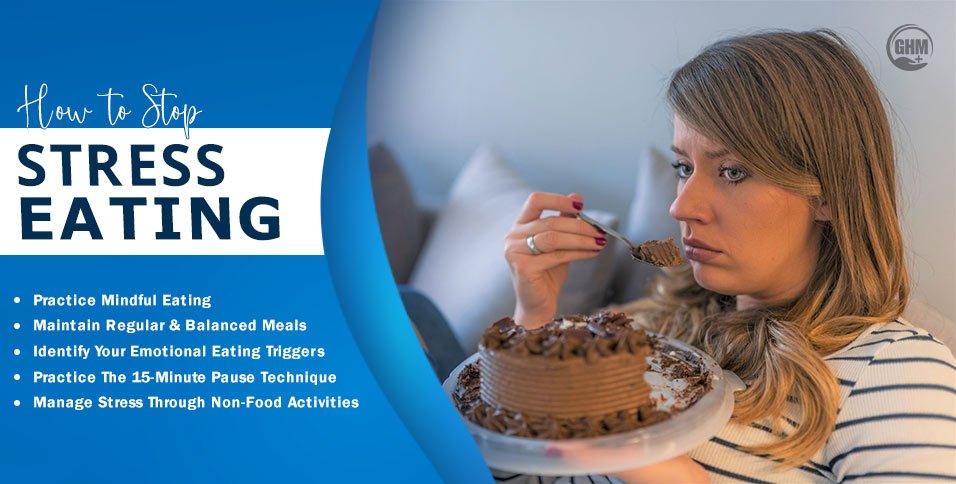
When you finish a stressful workday and feel completely drained, all you want is a bag of chips or a pint of ice cream. Most of us find ourselves in a similar situation whenever we are stressed. Life brings countless everyday pressures, and turning to food during stressful moments is a deeply human response. However, when comfort foods become your primary mechanism for coping with difficult emotions, this temporary relief can quickly morph into a frustrating, unhealthy habit. Understanding how to stop stress eating does not require rigid food restrictions or flawless self-control; instead, it starts with recognising your underlying triggers and learning compassionate, practical ways to regain balance.
To learn how to stop stress eating, keep reading this article. Also learn the reasons behind stress eating, the ways to recognise the habit, and whether it is a serious issue.
What Is Stress Eating?
Stress eating, frequently referred to as emotional eating, is the practice of consuming food in response to emotional experiences, such as stress, anxiety, loneliness, or frustration, rather than actual physical hunger. When you experience emotional hunger, food acts as a quick source of comfort, temporary pleasure, or distraction from uncomfortable feelings.
While enjoying a favourite treat on occasion is completely normal, relying on food as your go-to emotional management tool creates a recurring cycle that interferes with healthy eating habits. This behaviour ties directly into the brain’s reward system, where high-calorie foods trigger a brief surge of dopamine, reinforcing the mental association between stress and eating.
Recognising this pattern is the first major step toward building a healthier relationship with food and understanding how to stop stress eating.
According to data from the American Psycology of Associaltion, among adults who stress-eat or overeat, 34% report doing it out of habit, and 33% use it as a distraction from underlying stress.
How to Stop Stress Eating: 10 Practical Strategies
You want to know how to stop stress eating, but it requires putting a stop between your emotional triggers and your actions. Below are 10 actionable, sustainable ways to prevent stress eating and help you develop healthier eating patterns.
1. Identify Your Emotional Eating Triggers
To stop stress eating, you must first understand what causes it. Maintain a temporary food and mood journal to record the time of day, the specific food consumed, your estimated hunger level, and the exact emotions you felt right before eating. Tracking these details helps you spot recurring patterns, such as turning to sweets every afternoon due to workplace fatigue or seeking comfort during quiet evenings, so you can address your actual needs.
2. Distinguish Between Physical and Emotional Hunger
Before acting on a sudden food craving, take a brief moment to evaluate your body. Ask yourself whether your stomach is genuinely rumbling or if you are simply seeking emotional comfort. Recognising that your hunger originates from an emotional craving or a physical craving creates an opportunity to choose a more productive response.
3. Practice the 15-Minute Pause Technique
When an intense emotional craving strikes, commit to waiting 15 minutes before opening the pantry or ordering takeout. Use this short window to walk around, listen to soothing music, or practice deep breathing. This intentional pause helps lower impulsive reactivity and allows the intensity of eating when stressed to fade, ensuring you only eat when true physical hunger is present.
4. Practice Mindful Eating
Mindful eating involves paying full attention to your food, internal sensory experiences, and natural fullness cues. Turn off your television, put away your smartphone, and sit down at a table. Slow down your chewing, notice the textures and flavours of each bite, and set your fork down between mouthfuls. These simple mindful eating techniques transform eating from an automatic habit into a conscious, satisfying experience.
5. Maintain Regular and Balanced Meals
Skipping meals or severely restricting your food intake often backfires, plunging your blood sugar into a downward spiral that intensifies hunger and triggers overeating later in the day. Maintain a consistent meal schedule featuring a healthy mix of fibre-rich carbohydrates, quality proteins, and healthy fats to support physical satiety and keep unnecessary cravings at bay.
6. Manage Stress Through Non-Food Activities
Because food cannot resolve emotional distress, finding alternative coping mechanisms is essential. Build a personalised comfort menu filled with non-food activities tailored to specific emotions:
- If you feel stressed: Practice meditation, deep breathing exercises, or take a quiet walk outdoors.
- If you feel lonely: Call, text, or video chat with a close friend or family member.
- If you feel anxiety: Spend time with a pet, journal your thoughts, or consider professional counselling.
- If you feel bored: Read a book, start a creative hobby, or organise a living space.
7. Improve Your Sleep Routine
Fatigue and chronic sleep deprivation profoundly alter your hunger hormones, weaken emotional regulation, and magnify cravings for sugary comfort foods. Establish a consistent sleep and wake schedule, limit screen exposure an hour before bedtime, and design a relaxing nighttime routine to ensure your body gets the restorative rest it needs.
8. Make Your Food Environment Supportive
Relying entirely on willpower when a tub of ice cream sits front and centre in your refrigerator is an uphill battle. Keep highly tempting, processed snacks out of immediate sight in cupboards or pantries, avoid eating directly from large packaging containers, and place convenient, nutritious snack options within easy reach.
9. Stay Physically Active
Regular physical activity acts as a powerful natural mood booster, helping to dissipate stress energy and release feel-good endorphins. Incorporate accessible daily movements into your schedule, such as stretching between work tasks, cycling, practising yoga, or taking a brisk neighbourhood walk. Focus on consistency rather than gruelling workouts.
10. Practice Self-Compassion and Learn From Setbacks
Harsh self-judgment, guilt, and shame following an episode of emotional eating only add emotional weight to your shoulders, frequently triggering another cycle of stress eating. Treat setbacks as valuable learning opportunities to identify overlooked triggers and refine your coping strategies. Celebrate gradual behavioural progress rather than demanding instant perfection.
What Are The Causes of Stress Eating?
The urge of eating when stressed during high-stress moments is driven by a powerful combination of biological signals, psychological conditioning, and behavioural habits.
A. The Role of Cortisol
When people face stressful situations, their adrenal glands release a hormone called cortisol. While cortisol is essential for the body’s short-term fight-or-flight response, prolonged stress leads to persistently elevated cortisol levels, which can significantly ramp up your appetite and trigger intense cravings for sugary, high-calorie foods.
B. The Brain’s Reward Response
Enjoyable foods provide a fast and accessible source of energy that temporarily activates the brain’s reward pathways. Because comfort foods require very little metabolic effort to convert into energy compared to nutrient-dense options like vegetables or lean protein, your brain naturally seeks them out for quick relief.
C. Learned Emotional Habits
Over time, repeated stress eating experiences forge strong associations between specific emotions and particular foods. Whether a person observed family members turning to sweets during stressful childhood moments or developed office snacking habits during tight deadlines, these environmental cues heavily influence adult coping mechanisms and lead to emotional eating triggers.
D. Temporary Emotional Relief
Eating provides an immediate distraction from uncomfortable emotions, allowing you to bypass difficult feelings without addressing the root cause. However, because food cannot solve an emotional problem, the underlying stress remains once the eating stops. Therefore, it is important to understand how to stop stress eating.
How to Recognise Stress Eating With Signs and Symptoms
Spotting the distinct behavioural and emotional signs of stress eating helps you catch the habit before it affects your wellness goals. Common signs of eating when stressed include:
- Eating large quantities of food when there are no physical signs of hunger.
- Experiencing sudden, urgent cravings for specific comfort foods.
- Snacking automatically while working, watching television, or scrolling through a phone.
- Reaching for food immediately after difficult meetings, arguments, or emotionally draining events.
- Feeling guilty, ashamed, or entirely out of control after finishing a snack or meal.
Physical Hunger vs. Emotional Hunger: What’s The Difference?
| Physical Hunger | Emotional Hunger |
| Develops gradually over time | Appears suddenly and feels urgent like a demanding flash |
| Accompanied by physical signals like a growling stomach or low energy | Not linked to an empty stomach |
| Can be satisfied by a variety of different foods | Often involves very specific, intense cravings (e.g., only chocolate will do) |
| Usually stops naturally once you feel full | May continue mindlessly long after fullness sets in |
| Eating provides genuine physical satisfaction | Eating provides temporary emotional relief followed by potential guilt |
When Should You Seek Professional Help for Stress Eating?
While occasional stress eating is a normal part of the human experience, persistent patterns can sometimes indicate deeper psychological concerns or eating disorders that require professional oversight.
Signs That Professional Support For Stress Eating May Be Necessary
- Feeling completely unable to control your eating habits on a regular basis.
- Frequently consuming unusually large quantities of food in a short time frame until feeling uncomfortably stuffed.
- Experiencing intense, debilitating guilt or emotional distress after eating.
- Relying exclusively on food as your sole coping mechanism for persistent anxiety or depression.
Professionals That Can Help With Emotional Eating Treatment
- Registered Dietitian: Helps you build balanced, sustainable nutrition patterns without restrictive rules.
- Psychologist or Therapist: Guides you through identifying emotional triggers, processing underlying trauma, and developing robust cognitive behavioural coping strategies.
- Medical Doctor or Psychiatrist: Evaluates underlying metabolic, physical, or mental health conditions to recommend comprehensive treatment options.
Building a Healthier Relationship With Food
Overcoming stress eating is a journey that requires understanding how to stop stress eating. Healthy ways of managing stress rely on self-awareness, patience, and compassion rather than strict dietary perfection. To break the cycle of stress eating once and for all, you need to recognise your emotional triggers, implement mindful eating practices, manage daily stress with non-food solutions, and maintain balanced meals.
Take small, manageable steps forward today, and remember that professional guidance is always available if you need extra support along the way.
Frequently Asked Questions
- How to stop food anxiety?
Stopping food anxiety involves understanding its root causes, whether it stems from emotional stress, rigid food rules, or conditions like Avoidant/Restrictive Food Intake Disorder (ARFID), and practising flexible, compassionate strategies.
- Can skipping meals increase cortisol?
Yes, not eating, whether through acute fasting, skipping meals like breakfast, or severe calorie restriction, can raise cortisol levels.