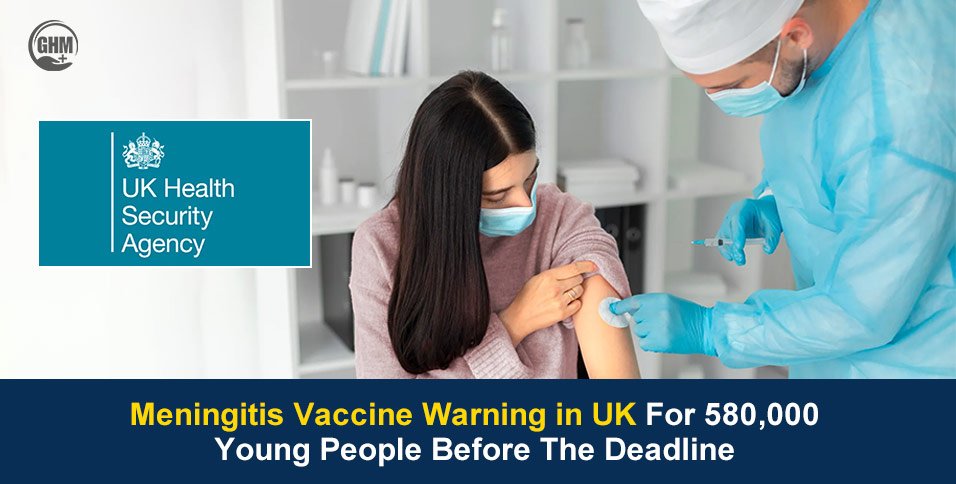
The UK Health Security Agency (UKHSA) has issued a fresh meningitis vaccine warning in UK, urging more than 580,000 young people to receive their first meningitis B (MenB) vaccine dose before the end of 2026. New figures show that only 28.2% of eligible 18- and 19-year-olds have received their first dose under the government’s one-off vaccination programme. This leaves more than 580,000 young people in this age group without their first dose.
The UKHSA meningitis alert follows several meningitis B outbreaks in England that caused three deaths earlier this year. Eligible individuals have until December 31, 2026, to receive their first dose, while the second dose will remain available until March 31, 2027.
Meningitis Outbreak in UK Prompted Emergency Vaccination Programme
The government introduced the one-off MenB vaccination programme in UK following several outbreaks earlier in 2026.
An outbreak linked to a nightclub in Canterbury, Kent, infected more than 20 people. Further clusters emerged in Dorset and Berkshire. Together, these outbreaks caused three deaths and left some survivors with serious, potentially lifelong health complications.
The incidents highlighted the risks of meningococcal disease among young adults, particularly those entering university and living in shared accommodation.
A separate incident in Suffolk also renewed local concerns after two teenagers from Framlingham contracted meningitis B following a summer festival.
In response to the wider meningitis outbreak situation, the government announced a time-limited vaccination offer in June, with the programme beginning on July 20, 2026.
Eligibility Criteria for MenB Vaccine in UK For Young People
The Free NHS meningitis vaccine programme targets young people considered at increased risk of meningococcal disease.
The current eligibility criteria for MenB vaccine include:
- Young people born between September 1, 2007, and August 31, 2008.
- Individuals under 25 who started university for the first time in autumn 2026.
- Individuals under 25 who started residential further education for the first time during the same period.
The offer also covers eligible first-year students who may have moved to England from other parts of the UK or overseas.
However, students already in their second or later university year, postgraduate students, and people aged 25 or older starting university do not qualify under the reported criteria.
The meningitis vaccine for young adults is available through participating community pharmacies in England. Eligible Year 13 students may receive invitations through the NHS App, text messages or letters.
Meningitis Vaccine Warning in UK Urges Youngsters To Get Both Doses
The one-off programme uses GSK’s Bexsero vaccine, which protects against most strains of meningococcal group B bacteria.
The meningitis vaccine course requires two injections administered at least 28 days apart to provide the intended protection.
Eligible individuals must follow these deadlines amid the Meningitis vaccine warning in UK:
- First dose: December 31, 2026.
- Second dose: March 31, 2027.
Anyone who receives the first dose close to the December deadline for Meningitis B vaccination should arrange the second appointment within the permitted vaccination period.
UKHSA has also warned that the approaching Christmas season could increase social gatherings and close contact among young people. This may create more opportunities for meningococcal bacteria to spread.
Importance of Meningitis Vaccine for University Students
Meningitis vaccine warning in UK for the youngster holds more importance. Young people entering university face increased exposure to meningococcal bacteria because of changes in their social and living environments.
According to UKHSA, first-year university students have approximately seven times the risk of meningococcal disease compared with people of a similar age who do not attend university.
Shared accommodation, parties, crowded social events and close personal contact can contribute to bacterial transmission. The bacteria causing Meningitis can spread through activities such as kissing, sharing drinks or vapes, and prolonged close contact. The risk also becomes particularly relevant during the winter.
Health Experts Call for Stronger Meningococcal Disease Prevention
Health experts have raised concerns that low Meningitis vaccination uptake could limit the programme’s ability to prevent further outbreaks.
Prof Andrew Pollard, director of the Oxford Vaccine Group, said that although the vaccine cannot prevent every case, it remains highly effective against MenB disease. He described the low uptake as worrying and stressed the importance of preventing avoidable infections.
Other experts have called for universities to promote vaccination more actively and for stronger public awareness campaigns. There have also been calls to reconsider the December deadline and review whether MenB vaccination should become a routine offer for adolescents.